BEHN APP
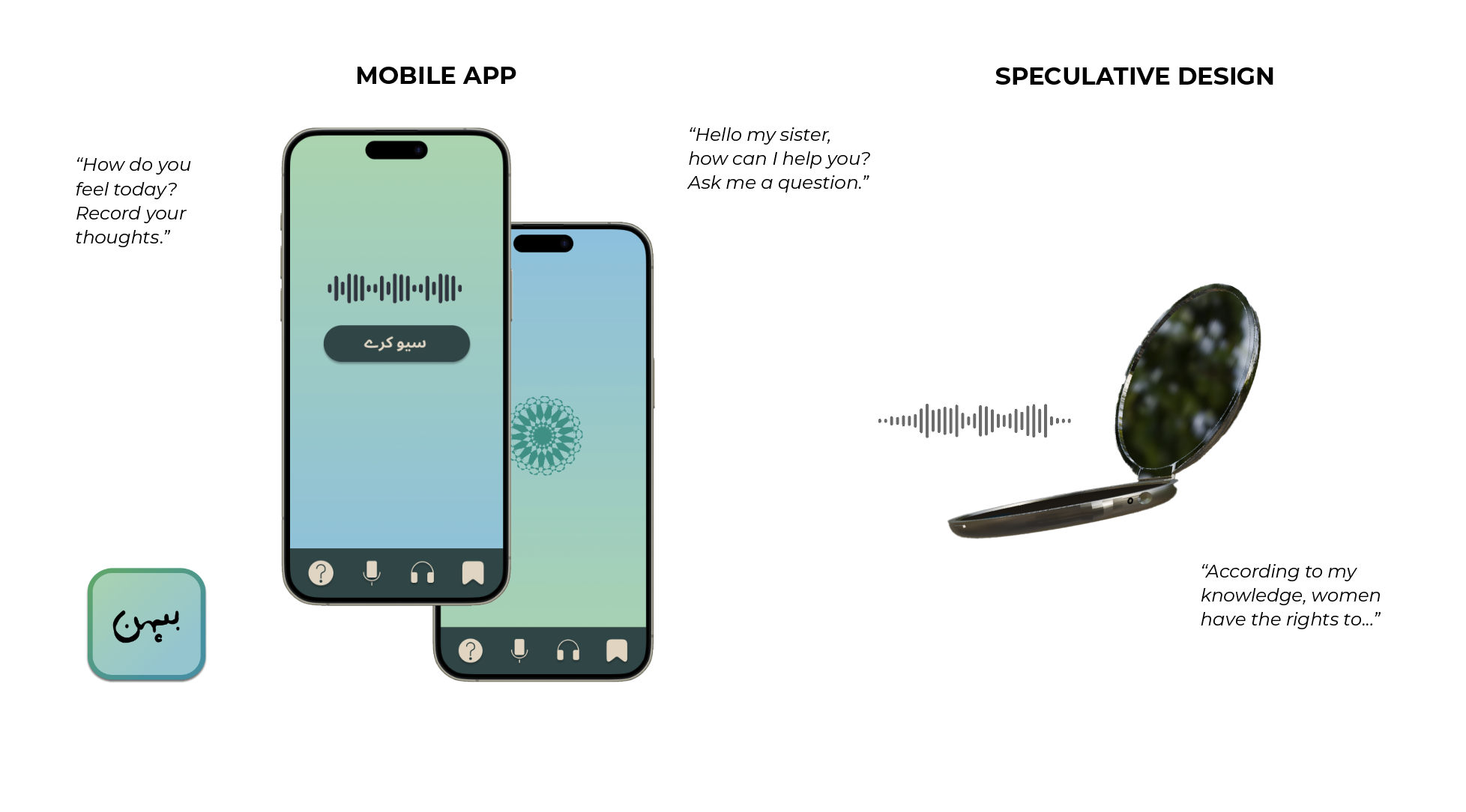
Behn is a speculative, voice-first AI assistant designed to help Pakistani women access information about their rights, health, education, and personal growth in a discreet and culturally sensitive way.
The project began as a mobile educational app, but through research and feedback, it evolved into a voice-based Urdu-speaking companion. This shift was important because the intended users may face barriers such as limited digital literacy, inconsistent internet access, cultural restrictions, and lack of privacy.
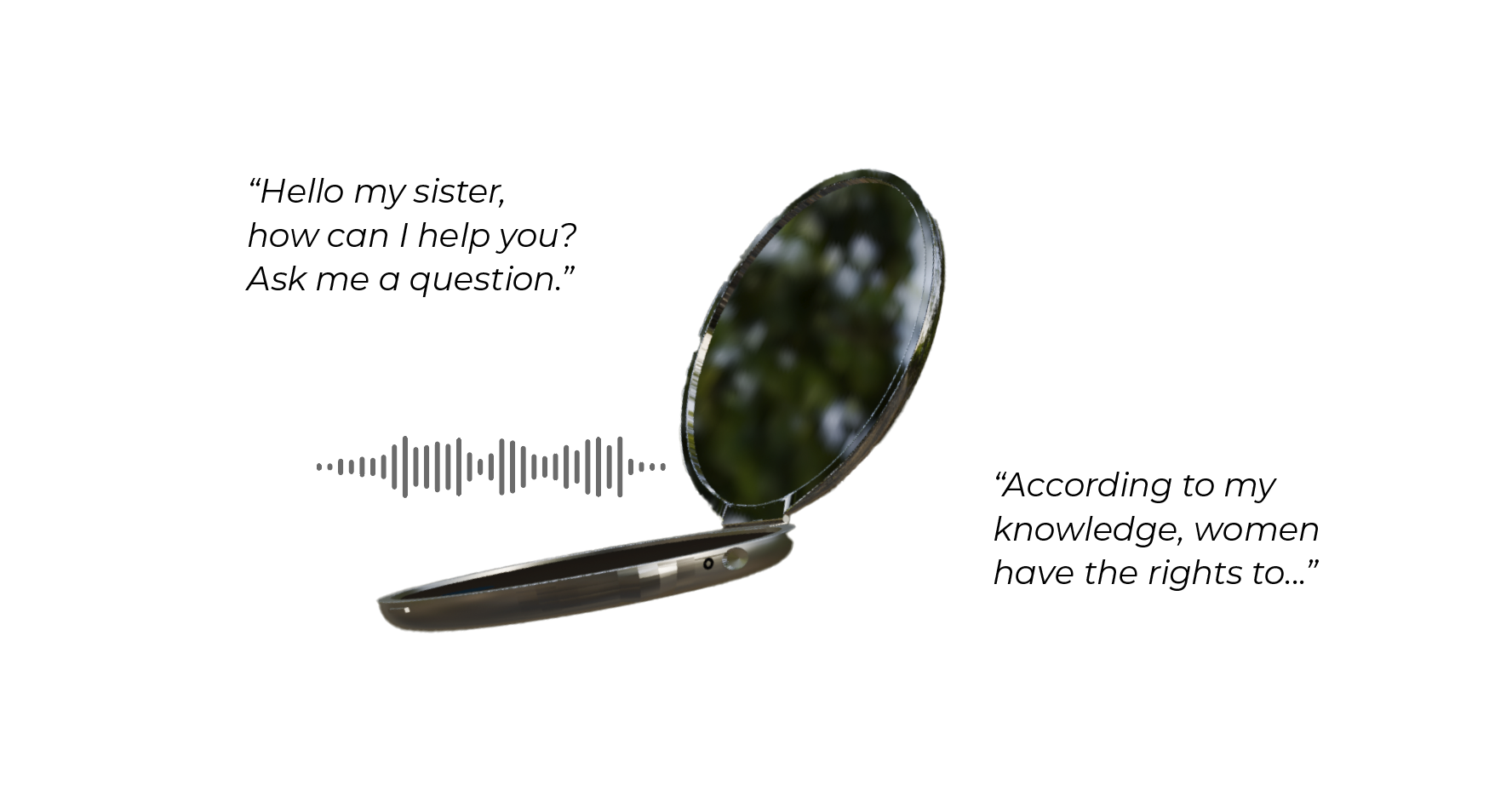
The final concept includes both a digital app prototype and a speculative physical device designed as a compact mirror. The compact mirror form was chosen because it feels familiar, portable, and discreet, allowing users to seek support without drawing unnecessary attention.
PROBLEM
Many Pakistani women, especially in underserved or rural contexts, face barriers when trying to access reliable information. These barriers can include limited internet access, low digital literacy, lack of privacy, cultural stigma, and restricted freedom of choice.
For sensitive topics such as health, legal rights, emotional well-being, or education, asking questions openly may feel unsafe or socially discouraged. Even when information exists online, it may not be accessible in a way that feels trustworthy, private, or easy to use.
The design challenge was:
How might I design a discreet, voice-first experience that helps Pakistani women ask questions, reflect, and access important information without shame, fear, or digital complexity?
TARGET USERS
The primary users are Pakistani women who may have limited access to education, technology, privacy, or trusted guidance. The experience is especially designed for women who may not feel comfortable typing, searching online, or asking sensitive questions in public or family settings.
The concept also considers users who:
Prefer speaking over typing.
Are more comfortable communicating in Urdu.
Have inconsistent internet access.
Need privacy when asking sensitive questions.
May not own a personal smartphone.
Need information presented in a simple, supportive way.
USER PAIN POINTS
Limited access to trusted information
Users may not know where to ask questions about health, rights, education, or personal growth. Even when information is available online, it may feel overwhelming, unreliable, or difficult to understand.
Cultural stigma around sensitive topics
Questions related to women’s health, rights, safety, or personal choice can carry shame or social risk. This may prevent users from seeking information at all.
Low digital literacy
A text-heavy app could exclude users who are not confident readers or who are unfamiliar with navigating digital interfaces.Lack of privacy
For many users, privacy is not guaranteed. A visible app, search history, or saved conversation could create safety risks.Inconsistent internet access
The experience needed to consider users who may not always have reliable connectivity.
APP WALKTHROUGH
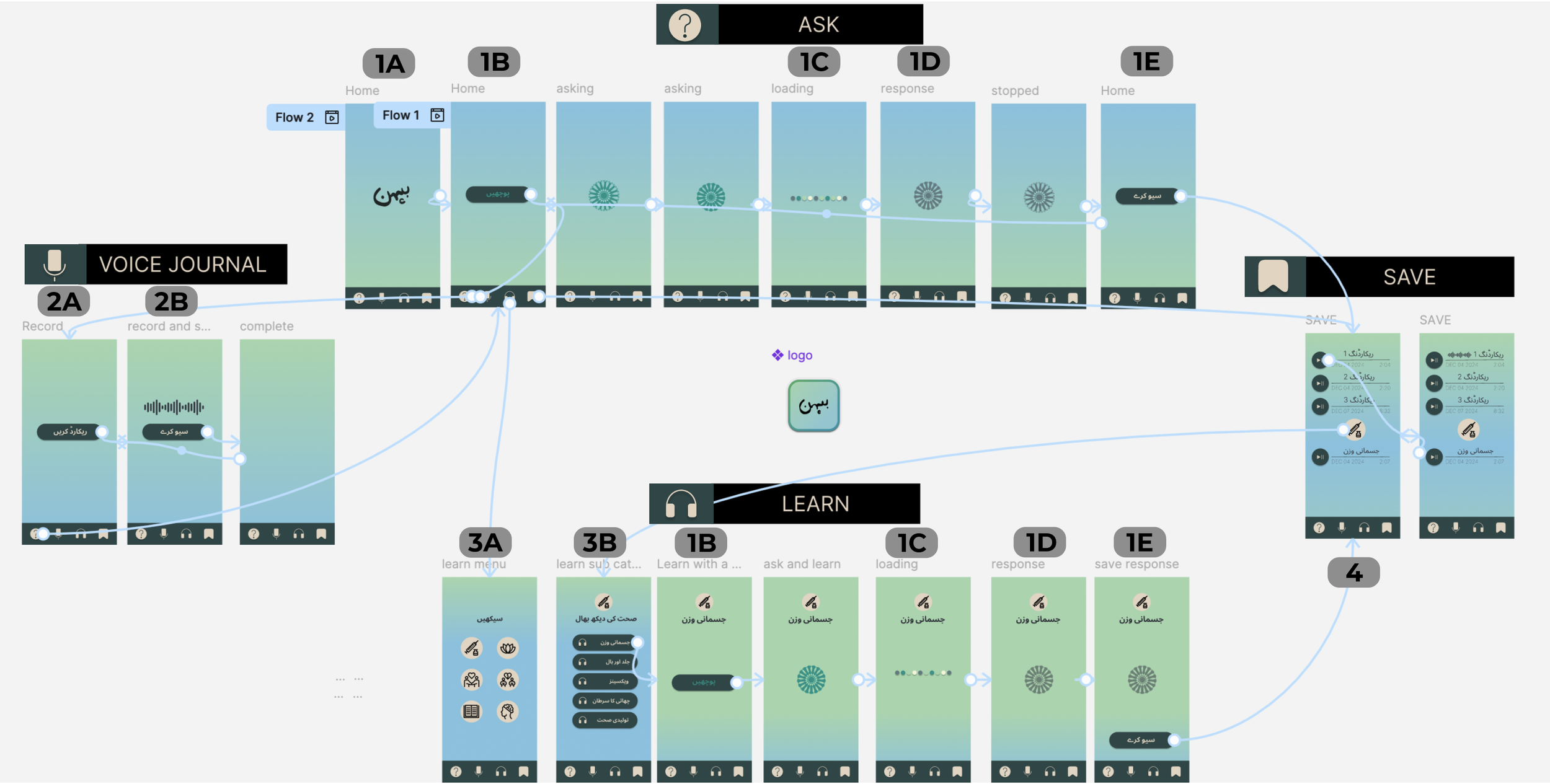
A walkthrough of the prototype.
USER NEEDS
Users needed an experience that felt:
Discreet
The product should not immediately reveal that the user is asking sensitive questions.
Familiar
The form and interaction should feel easy to understand without requiring advanced digital skills.
Voice-first
Users should be able to speak naturally in Urdu rather than rely on typing.
Supportive
The assistant should feel like a nonjudgmental “older sister” figure rather than a formal chatbot.
Private and secure
The system should protect user trust, especially around stored voice entries and personal questions.
Reflective
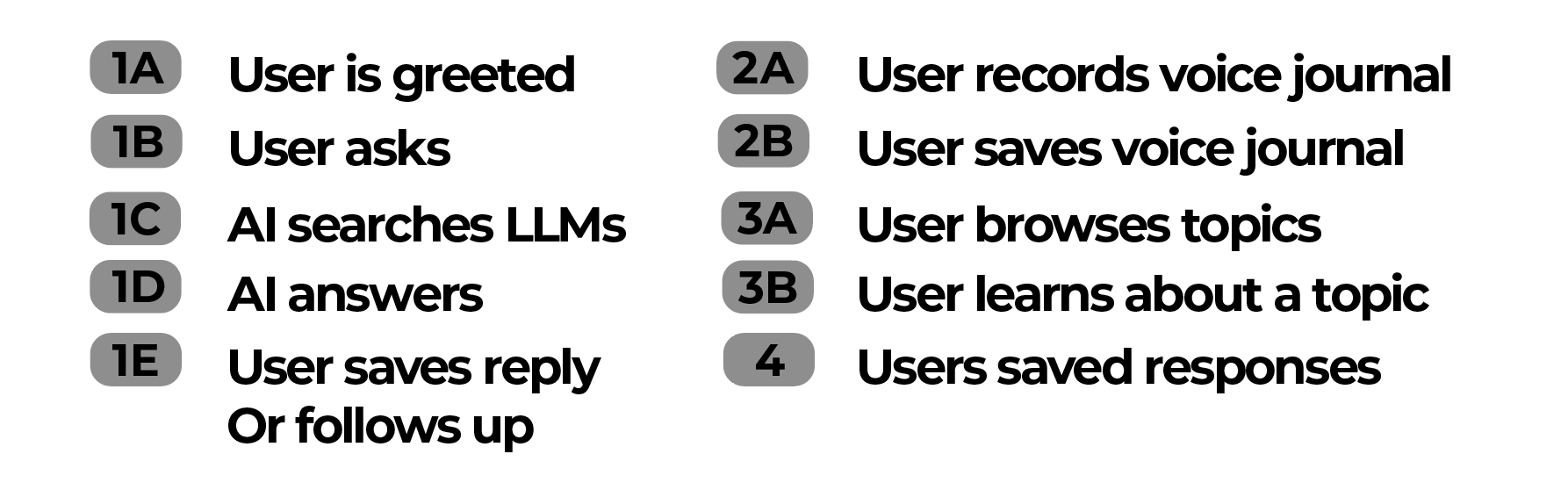
Users should be able to revisit what they asked, save answers, and use audio journaling as a way to process thoughts.
USER MAP
DESIGN GOAL
The goal was to design a culturally sensitive AI companion that could lower the barrier to asking questions.
Instead of designing a standard educational app, I wanted to create a system that felt approachable, intimate, and safe. The experience needed to support both direct information-seeking and personal reflection.
The product had to answer three key design questions:
How can women ask sensitive questions without needing to type or search publicly?
How can the interface feel supportive without becoming intrusive?
How can a speculative physical object create privacy, familiarity, and access?
RESEARCH AND CONTEXTUAL INQUIRY
I explored the social and technological barriers that can prevent women from accessing information. The research pointed to a major design tension: the users who may benefit most from this kind of support may also be the users least served by traditional smartphone-first, text-heavy apps.
This led me to move away from a conventional app model and toward a voice-based experience. Voice interaction became central because it could support users with lower literacy levels and make the experience feel more conversational.
Feedback from peers also raised important ethical concerns, especially around storing voice data. Since voice can be highly personal and identifiable, privacy could not be treated as a secondary feature. It had to be part of the core design direction.
CONCEPT EVOLUTION
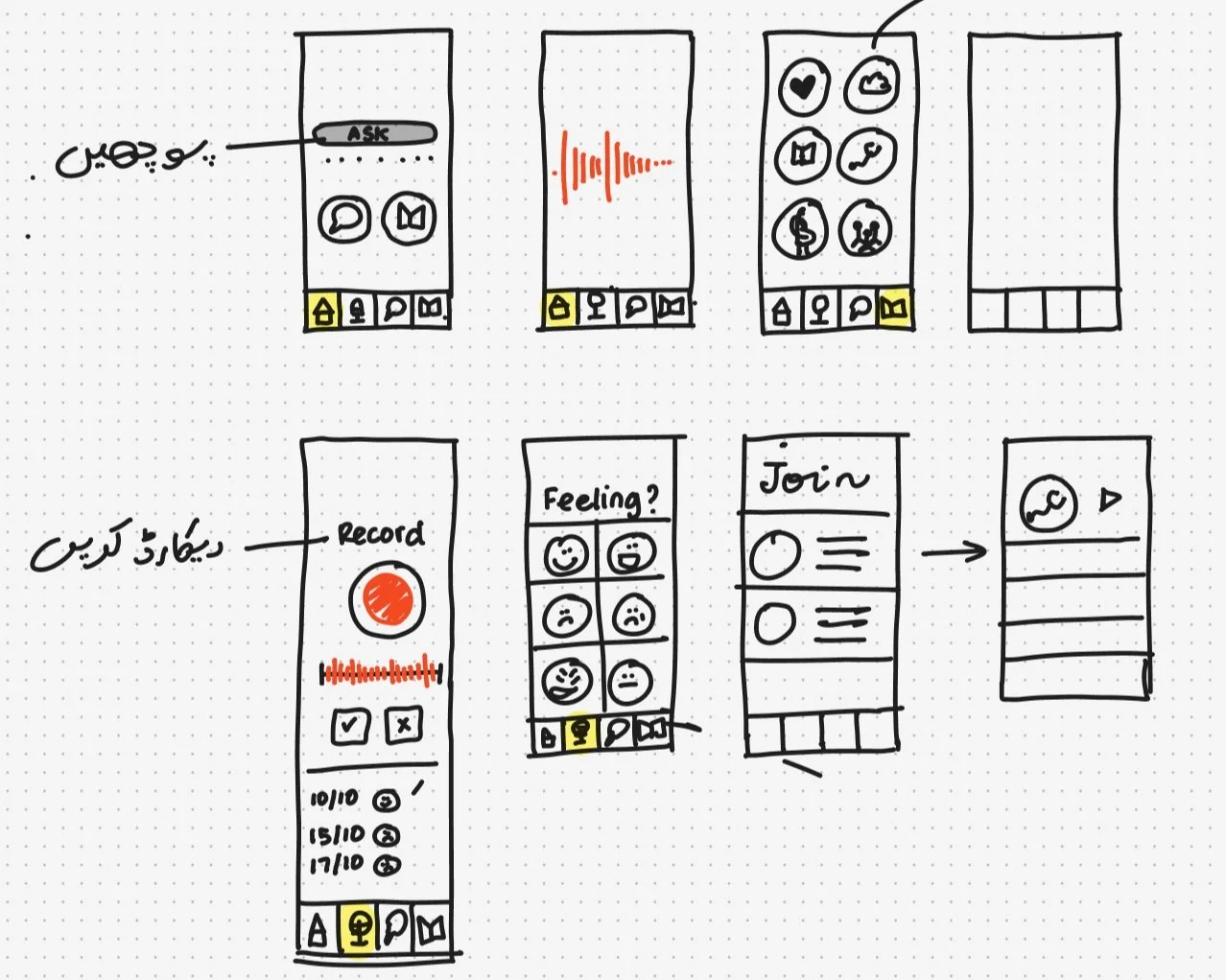
Initial Concept: Text-Based Educational App
The project began as a text-based app where users could browse educational topics and access resources. However, this approach created limitations. It assumed that users were comfortable reading, typing, navigating menus, and using a smartphone privately.
Shift to Voice-Based AI Companion
To make the experience more accessible, I shifted the concept toward a voice-first assistant. Users could ask open-ended questions in Urdu, receive spoken responses, and continue learning through follow-up prompts.
This changed the interaction model from “search and read” to “ask and listen.”
Final Direction: App + Discreet Compact Mirror Device
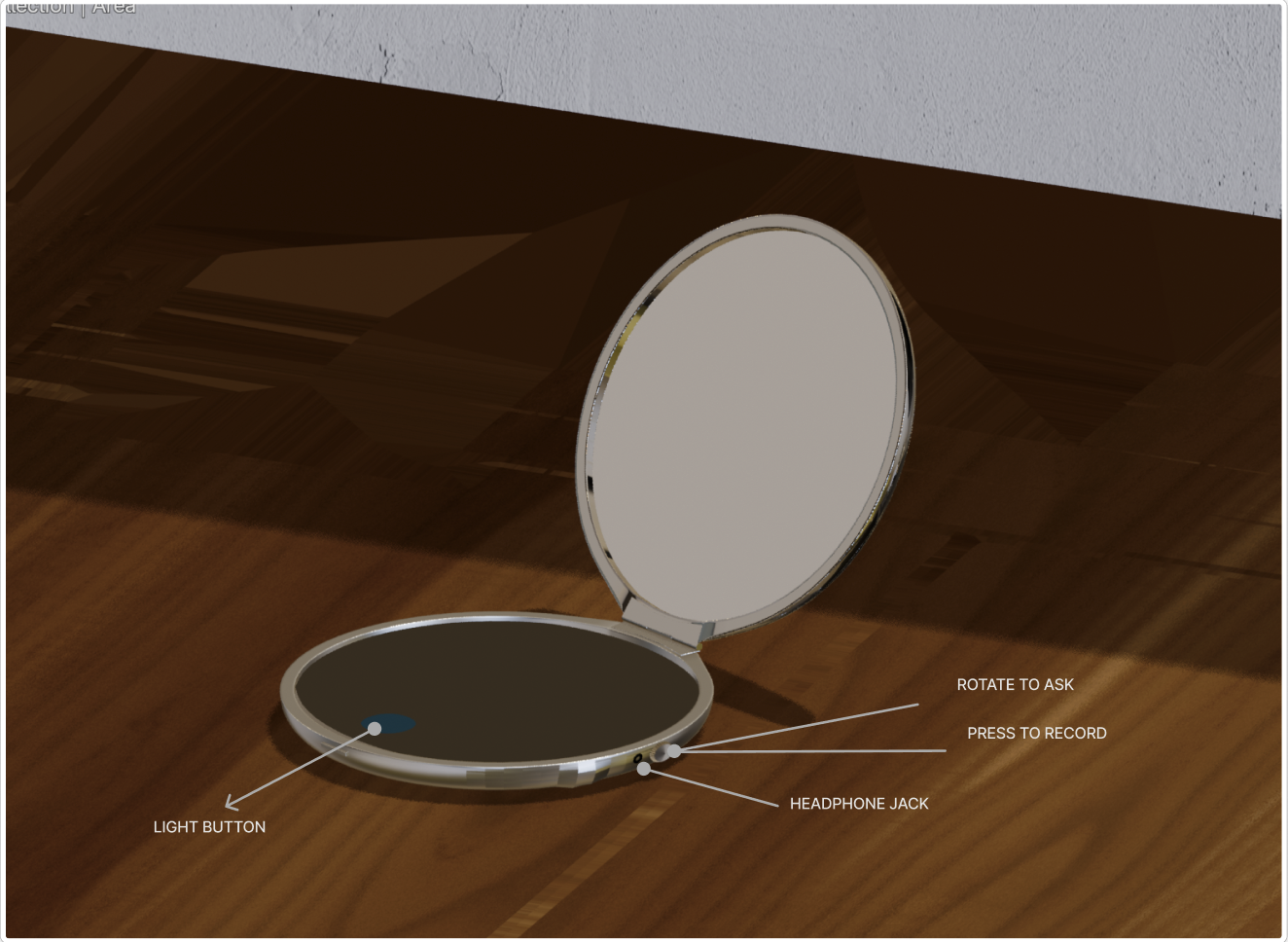
The concept then expanded into a speculative tangible product: a compact mirror with a built-in voice assistant. The compact mirror made the product feel familiar and discreet. It could exist as an everyday object rather than an obvious technology device.
This physical form helped address two major UX needs: privacy and approachability.
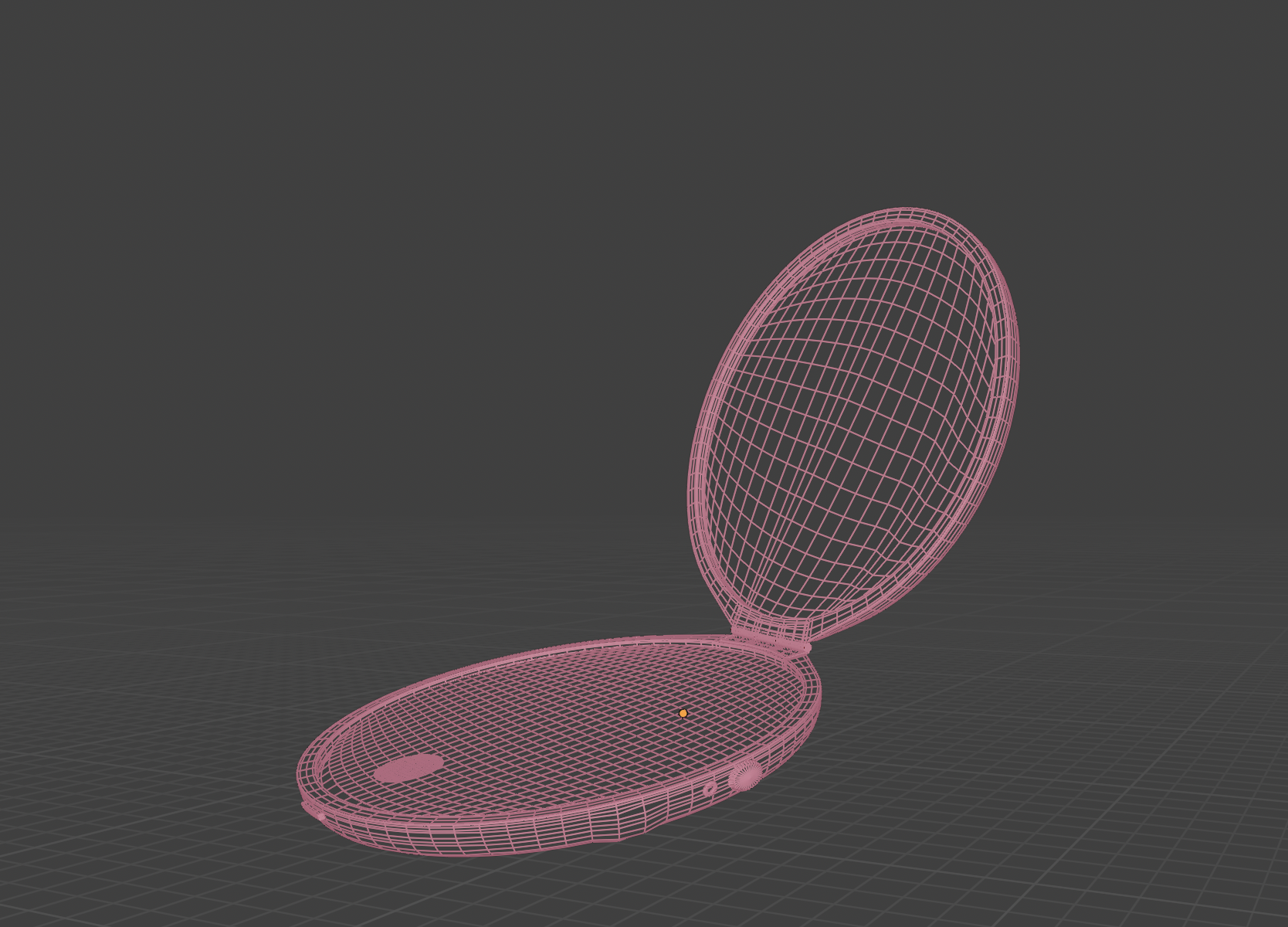
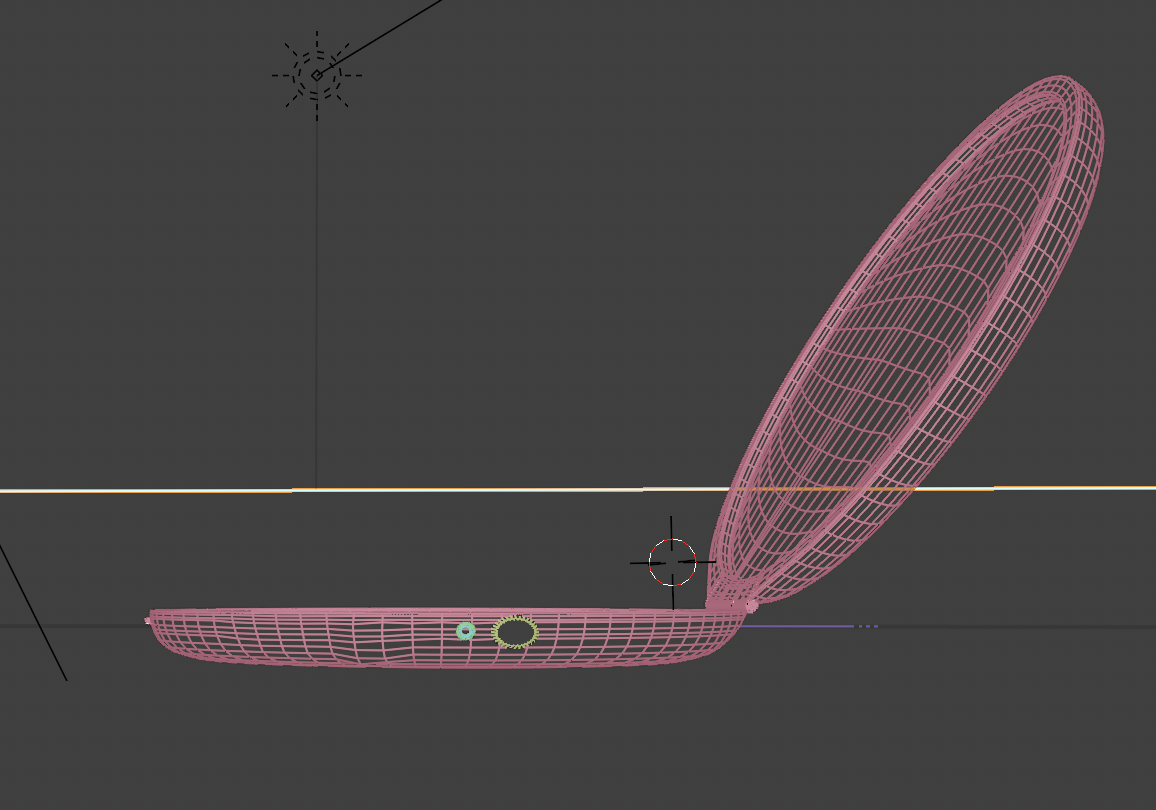
3D MODEL OF THE COMPACT MIRROR DEVICE
SOLUTIONS
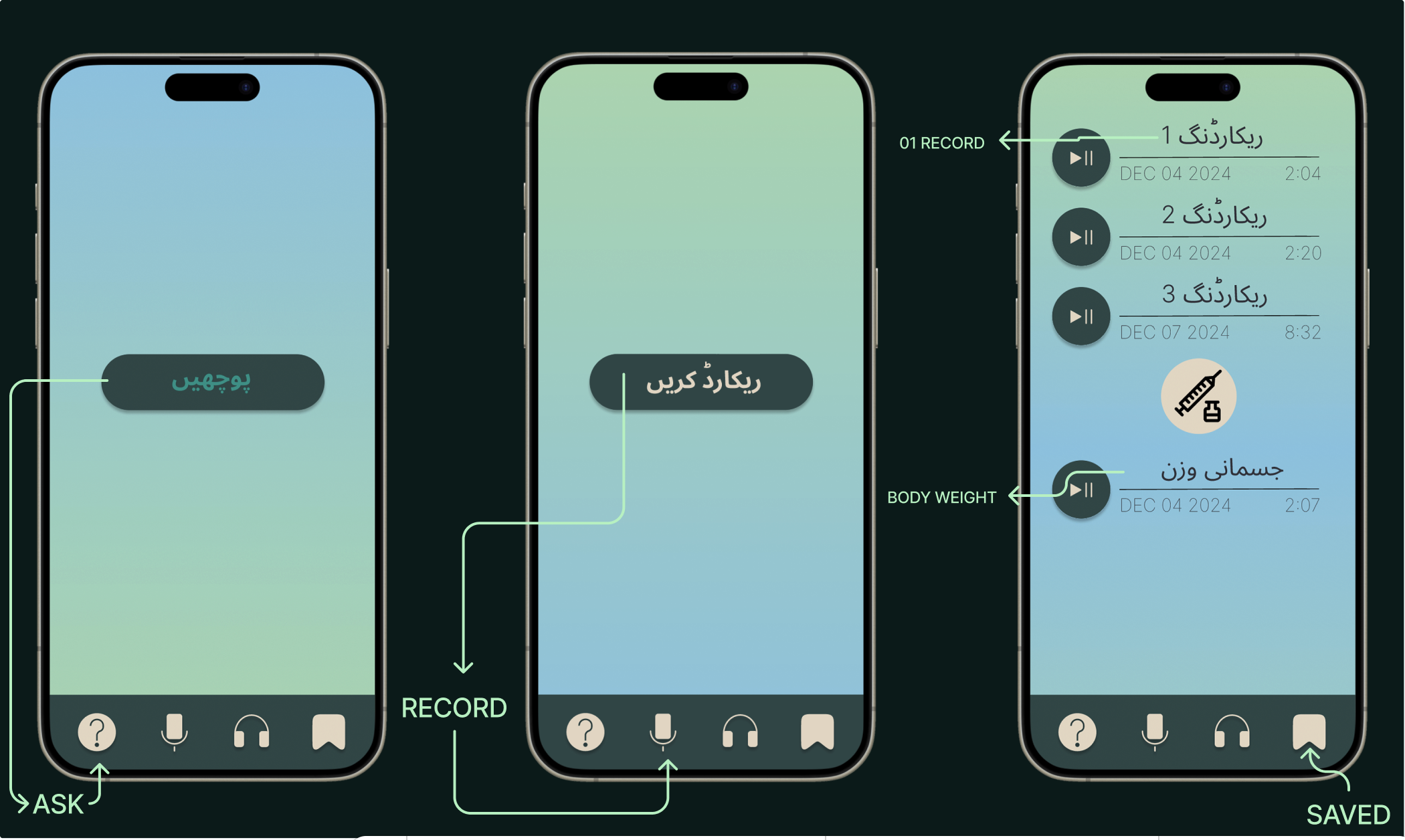
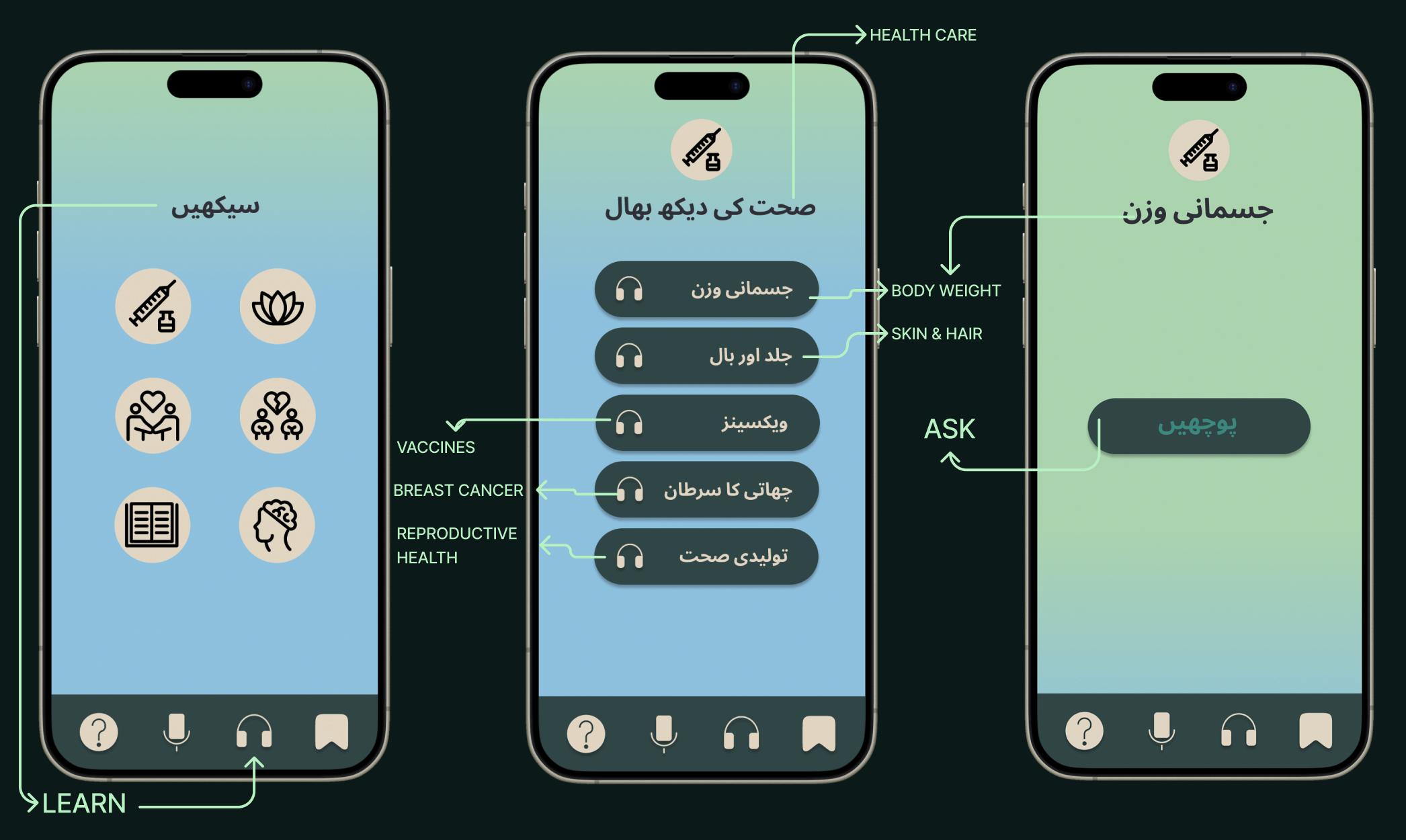
Behn is designed as a voice-assisted platform powered by LLMs. Users can ask broad questions, browse structured categories, save responses, and record audio journals.
The assistant learns from user interaction patterns and offers follow-up questions to help users deepen their understanding. The tone is designed to feel like a trustworthy sister: warm, familiar, and nonjudgmental.
The experience includes two connected parts:
The Behn App
A digital prototype where users can ask questions, revisit saved entries, browse topics, and access their audio journals.
WHY A COMPACT MIRROR?
The compact mirror became an important design decision because it aligned with the emotional and cultural needs of the project.
A compact mirror is familiar, portable, and personal. It can sit naturally in a bag or room without immediately revealing its function. This makes it less intimidating than a visible “women’s rights” device or app.
The compact mirror also supports discreet use. A user can interact with it privately, use headphones, and avoid drawing attention to the type of information she is seeking.
From a UX perspective, the compact mirror solves for:
Privacy
It disguises the support system within an everyday object.
Familiarity
It uses a form many users already understand.
Portability
It can travel with the user without feeling like a formal device.
Emotional safety
It creates a softer entry point for difficult or sensitive questions.
KEY FEATURES
Urdu Voice Assistant
Users can ask open-ended questions in Urdu, making the experience more accessible for users who may not be comfortable typing or reading long text.
Structured Topic Categories
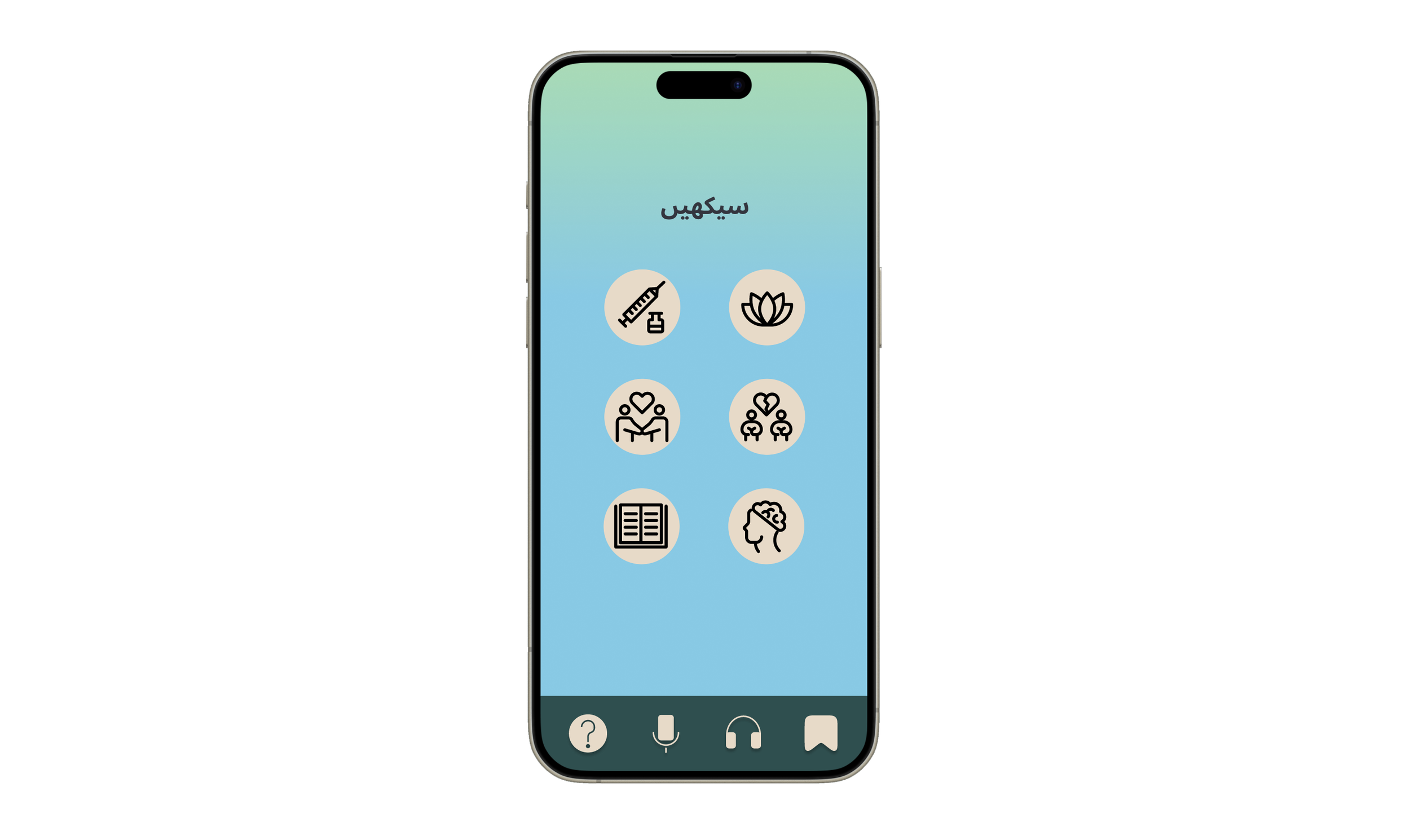
The assistant supports structured inquiries by category, helping users explore popular topics such as health, rights, education, and personal growth.
Follow-Up Questions
Behn can generate follow-up questions to help users continue learning. This turns one question into a guided conversation rather than a one-time answer.
Audio Journaling
Users can record voice journals to express thoughts, reflect on feelings, and track personal growth over time.
Saved Questions and Entries
Questions, answers, and journal entries are saved so users can revisit them later. This supports learning, reflection, and continuity.
Discreet Compact Mirror Form
The speculative device is designed as a compact mirror with a light, dial, record button, and headphone jack. The form allows the assistant to blend into everyday life while protecting privacy.
ITERATIONS
Mood Check-In
I initially imagined a mood check-in before the voice journal so users could label how they were feeling. However, translating this into a fully voice-based system was challenging.
The feature remains a future opportunity because emotional check-ins could help users reflect more deeply, but they need to be designed carefully so they do not interrupt or overcomplicate the experience.
Voice Privacy and Anonymity
Peer feedback raised concerns about storing voice data, especially because voice recordings can reveal identity. This shifted my thinking toward stronger privacy protections.
Future iterations would need to include password protection, local storage options, voice masking, and clear consent around what is saved.
Community Support
I also explored a future community support feature where women could connect or hear from others anonymously. However, this raised safety and moderation concerns.
Because of this, the community feature remains speculative and would require careful design around anonymity, consent, and harm prevention.
ETHICAL CONSIDERATIONS
Because Behn deals with sensitive topics, ethics are central to the design.
The biggest concerns include:
Voice data privacy
Voice recordings are deeply personal and potentially identifiable.
User safety
The product must not expose users to risk if discovered by others.
Accuracy of information
Information related to health, rights, and safety must be reliable and carefully sourced.
AI limitations
An LLM-based assistant should not replace professional legal, medical, or crisis support.
Consent and control
Users should know what is being saved, how it is used, and how to delete it.
These considerations helped me understand that trust is not just created through friendly tone or visual design. Trust has to be built into the system through privacy, transparency, and user control.
CHALLENGES
One of the biggest challenges was designing for users who may have low digital literacy while also addressing sensitive, high-stakes topics. The interface had to be simple without oversimplifying the seriousness of the information.
Another challenge was the technical limitation of the prototype. Since this was a speculative design project, I had to imagine features such as offline access, local storage, and AI-powered voice conversation without fully implementing them.
A third challenge was balancing empowerment with safety. The design needed to help women access information while recognizing that privacy and discretion could be essential to their well-being.
OUTCOME
The final concept reframed the project from a standard educational app into a culturally sensitive, voice-first AI companion.
The project resulted in:
A UX prototype for a voice-based Urdu assistant.
A speculative product concept in the form of a compact mirror.
A 3D model exploring the physical interaction design.
A clearer understanding of accessibility, privacy, and cultural context.
A stronger design direction rooted in user needs rather than technology alone.
This project helped me explore how UX can support access to information in contexts where safety, literacy, privacy, and culture deeply shape the user experience.
FUTURE IMPROVEMENTS
Future versions of Behn would need deeper user research and technical testing with the communities it aims to serve.
Potential improvements include:
Offline access
Allow users to access saved information without reliable internet.
Local data storage
Store sensitive entries on the device rather than in the cloud.
Password or gesture protection
Protect voice journals and saved questions from being opened by others.
Voice masking
Allow users to anonymize voice recordings if community features are added.
Verified information sources
Connect responses to trusted legal, health, and educational resources.
Emergency exit mode
Add a quick way to disguise or close the experience if the user feels unsafe.
Community support with moderation
Explore anonymous peer support carefully, with strong safety and moderation systems.
REFLECTION
Behn helped me understand that accessibility is not only about making an interface easier to use. It is also about designing for privacy, culture, trust, and emotional safety.
The project began with the question of how women could access information, but it became a broader exploration of how design can create safer entry points for asking questions that may otherwise remain unspoken.
Through this project, I learned that speculative design can help imagine futures that are more caring and inclusive. However, when designing for vulnerable contexts, imagination must be paired with responsibility. A product like Behn would need strong privacy protections, careful research, and ethical boundaries before it could become real.