VOQA
A civic engagement app for discovering, learning from, and giving feedback to San José museums
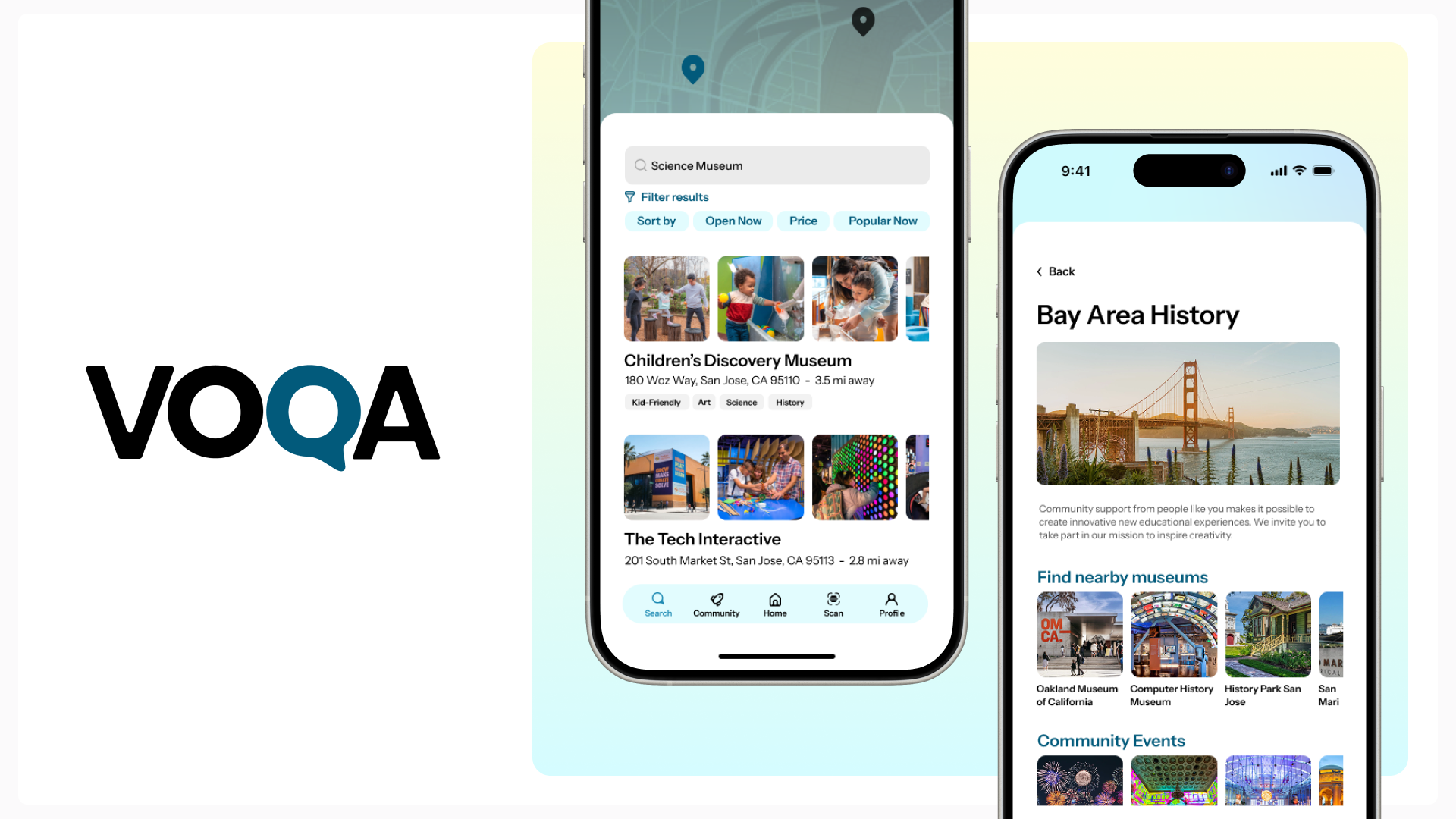
VOQA is a mobile app designed to help people discover and engage with San José museums as civic spaces. Through field visits, interviews with museum professionals and visitors, and secondary research, our team explored how museums build community connection through education, representation, play, storytelling, and feedback. The final prototype helps visitors find nearby museums, scan exhibits for accessible stories, explore community events, leave real-time feedback, and build a personal record of their museum experiences.
-
Figma, FigJam, Google Docs, field notes, interview synthesis
-
Group project with 2 collaborators
My role: UX research, field observation, interviews, synthesis, product strategy, prototyping, UI design refinement, and case study development
-
2 months
Museums are more than places to view objects. They are civic spaces where people learn about culture, identity, history, community, and social responsibility. For this project, our team explored how museums in San José support civic engagement and how visitors experience that engagement in real life.
Over two months, we visited local museums, spoke with museum professionals and visitors, reviewed academic research, and studied how civic engagement appears through exhibitions, programs, education, accessibility, and community events.
Our research revealed a key gap: museums are actively trying to build community connection, but visitors do not always know how to engage, what is available nearby, or how to share meaningful feedback in the moment.
To respond to this, we designed VOQA, a mobile app that helps visitors discover local museums, explore exhibits through accessible storytelling, participate in community events, and share real-time feedback with museums.
Museums want to create inclusive, educational, and community-centered experiences, but they often lack a simple way to understand visitor needs in real time.
Through interviews, we learned that many museums still rely on paper surveys, QR codes, informal conversations, or delayed feedback. These methods often miss the emotional, personal, and contextual insights visitors have while they are actually inside the museum.
At the same time, visitors often struggle to discover nearby museums, understand whether exhibitions are relevant to them, or find accessible ways to engage beyond simply viewing displays.
PROBLEM STATEMENT
Museum professionals are working to create civic, inclusive, and educational experiences, but visitors often lack clear pathways to discover, understand, participate in, and respond to those experiences. This creates a gap between museum intentions and visitor engagement.
HOW MIGHT WE
How might we help museum visitors discover meaningful local museum experiences, engage with exhibits more personally, and share feedback that helps museums better serve their communities?
We began by asking a simple question: what does civic engagement actually mean in a museum context?
Across our research, the core idea was participation. Civic engagement is about people coming together to learn, reflect, contribute, and improve their communities.
In museums, civic engagement can appear in many ways:
Dialogue around identity, history, and social issues
Representation of local and underrepresented communities
Educational programming for children and families
Cultural celebrations and community events
Visitor feedback and interpretation
Collaborative exhibit-making
Moments of social connection between visitors, staff, and community members
RESEARCH PROCESS
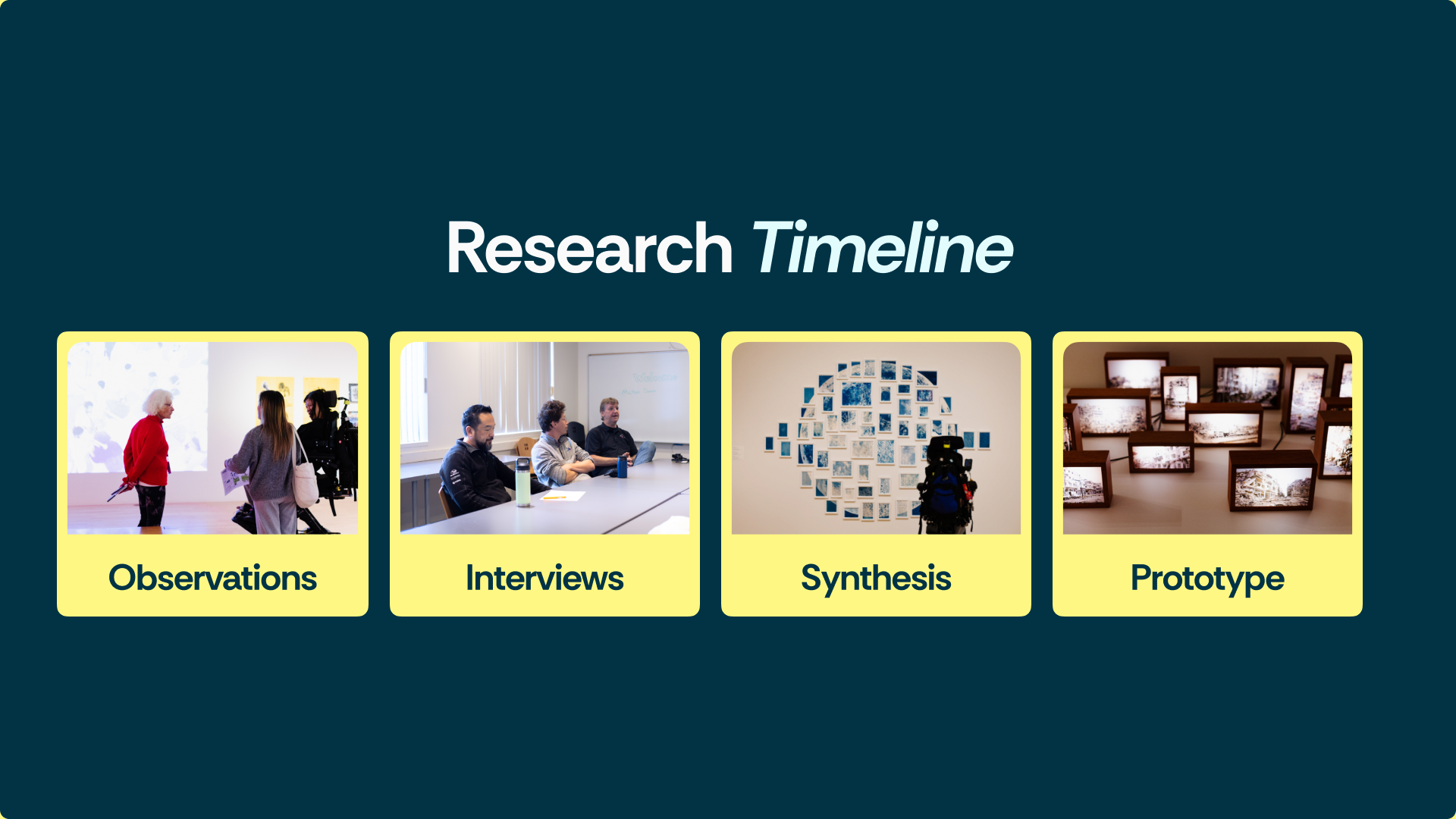
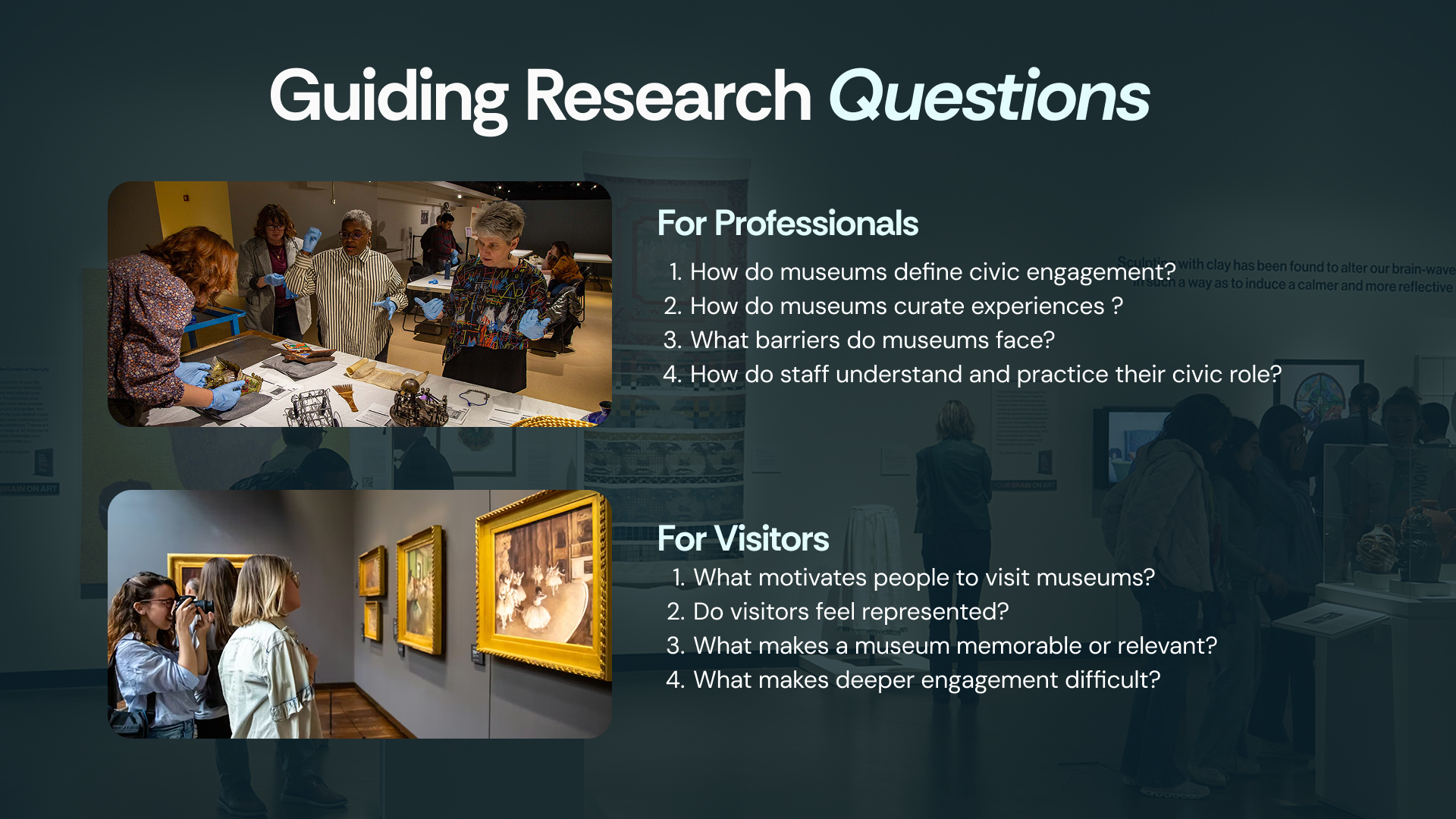
Our research process combined secondary research, field observations, professional interviews, visitor conversations, and synthesis.
Research Methods
We used:
Secondary research on civic engagement, participation, museum labor, and access
Field visits to San José museums
Observational research inside galleries and interactive spaces
Interviews with museum professionals
Visitor interviews and informal conversations
Persona development
Opportunity mapping
Prototype design and refinement in Figma
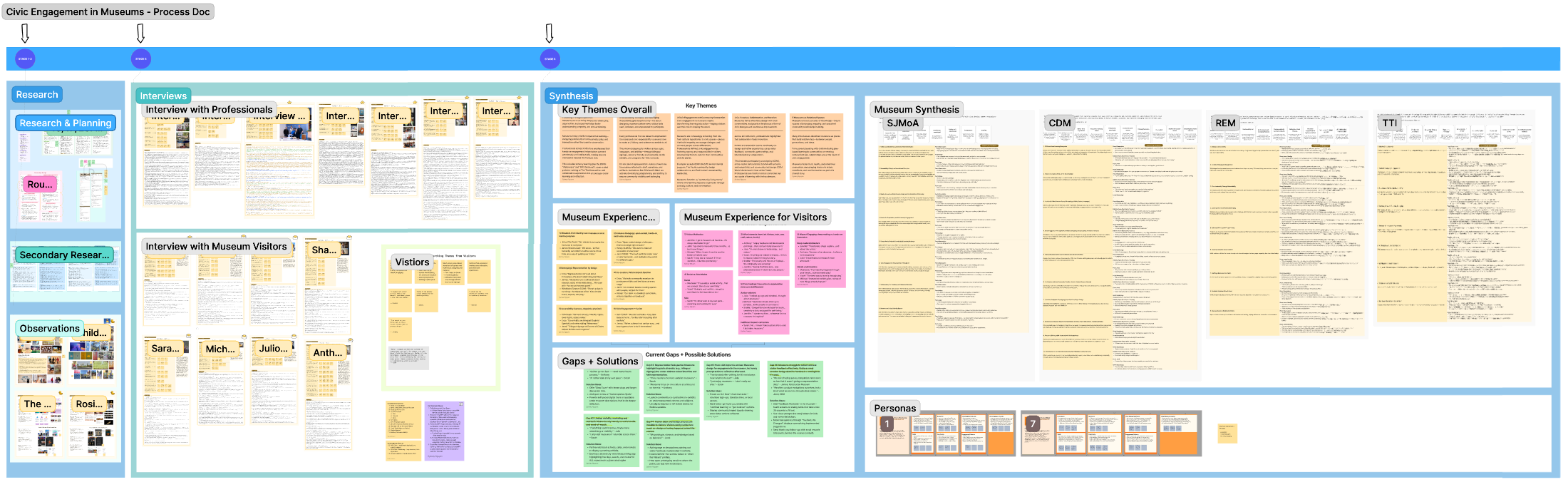
Process document available
Research Sites
We studied civic engagement across several Bay Area and San José museum spaces, including:
San José Museum of Art
Children’s Discovery Museum
Rosicrucian Egyptian Museum
The Tech Interactive
Each museum showed a different model of civic engagement. Some focused on quiet reflection and identity. Others emphasized play, STEM learning, cultural celebration, or immersive storytelling.
SECONDARY RESEARCH
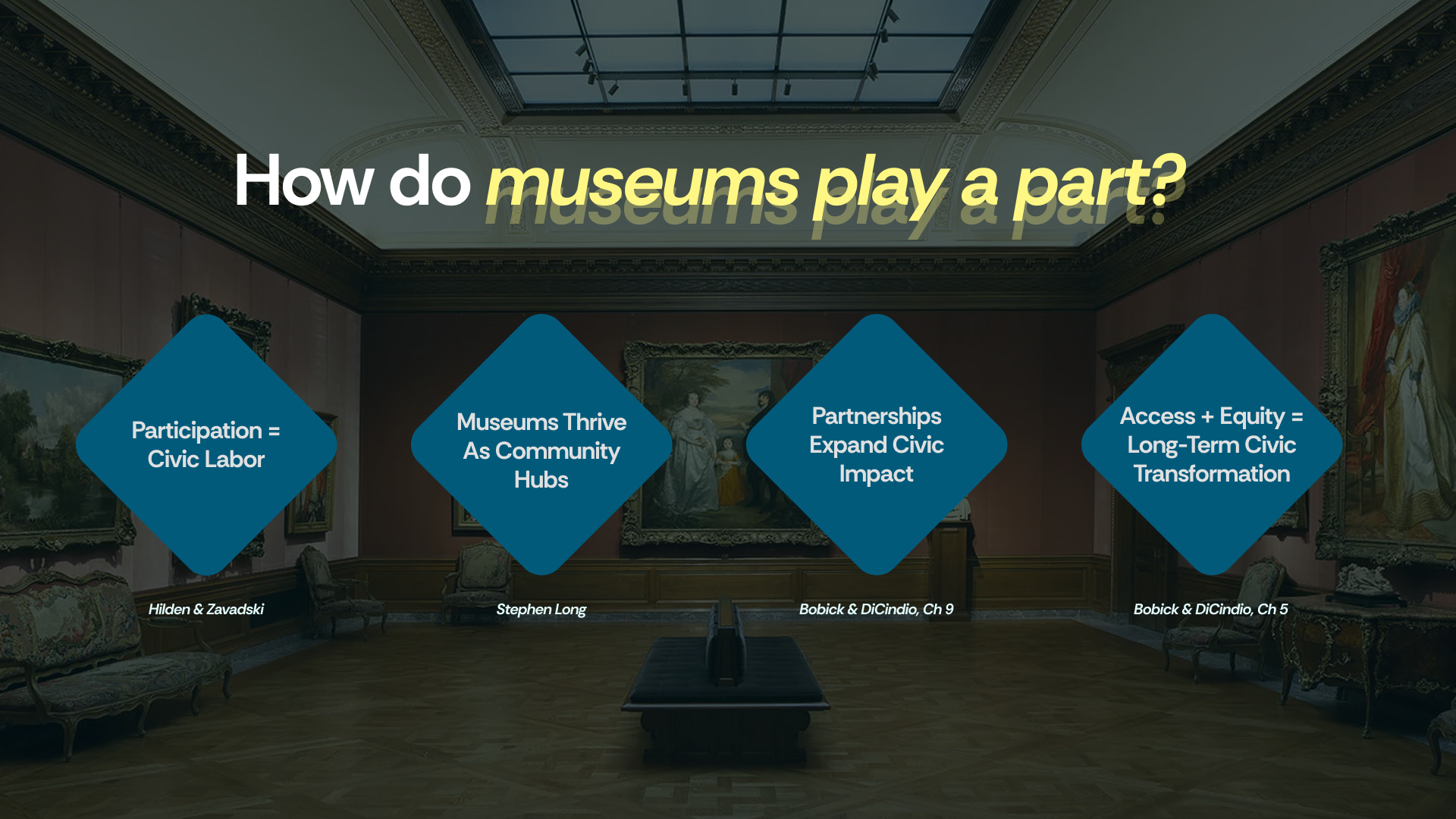
Before conducting fieldwork, we reviewed academic sources on museum participation, community engagement, education, and access.
A recurring theme was that museums can become civic spaces when they share authority with their communities. However, participation is not always simple. When museums ask artists, educators, families, or community members to participate, they are also asking for emotional, intellectual, and time-intensive labor. If that labor is not recognized or supported, civic engagement can become extractive rather than empowering.
Another major theme was the idea of museums as community “living rooms.” When museums listen to local needs, form partnerships, and create welcoming spaces, they can become trusted places for learning, belonging, and dialogue.
We also studied museum–university and museum–school partnerships, which showed how civic engagement can happen through education, mentorship, and access. These programs can support youth identity, creativity, and social mobility, but they also require long-term institutional support to be sustainable.
Secondary Research Takeaway
Civic engagement in museums is not only about inviting the public in. It is about sharing power, recognizing labor, creating equitable access, and helping people see themselves as part of a larger community story.
PRIMARY RESEARCH
Our primary research focused on understanding civic engagement from two perspectives:
The people who create museum experiences
The people who visit and participate in them
We wanted to understand where museum intentions aligned with visitor experiences, and where gaps appeared.
Field Observations
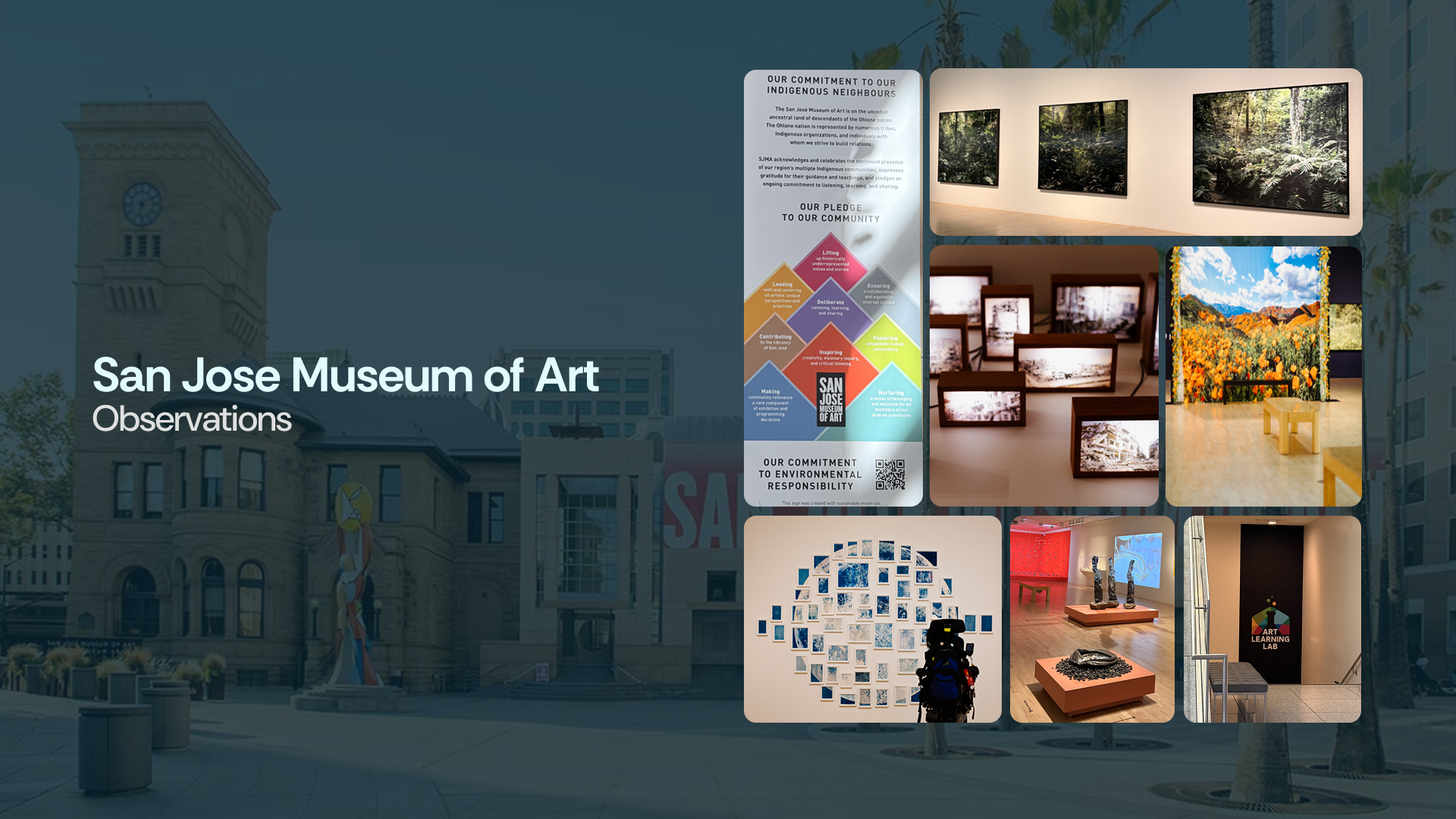
At the San José Museum of Art, we observed a calm, quiet, and reflective environment. Visitors moved slowly through the galleries, often engaging independently or in pairs. The museum relied heavily on text-based interpretation, with QR codes and guided tours available for deeper context.
The exhibits encouraged reflection on identity, social issues, and local stories. However, social interaction between visitors was limited. The experience supported personal interpretation, but participation was mostly self-directed.
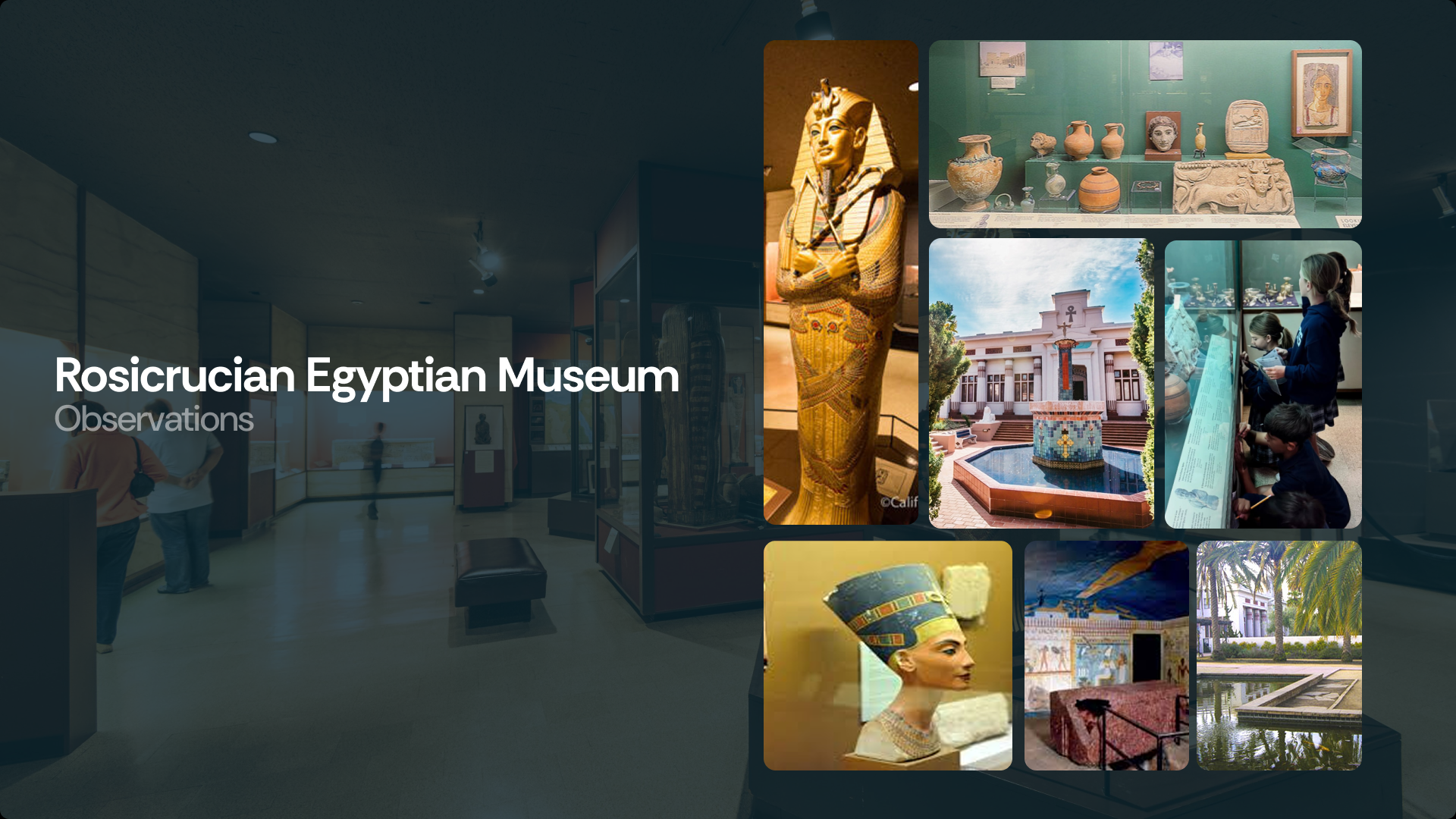
At the Rosicrucian Egyptian Museum, ancient history became a tool for reflection and civic awareness. The museum used immersive environments, storytelling, and hands-on workshops to help visitors connect with deep time, cultural preservation, and personal identity.
The museum’s approach showed us how civic engagement can emerge when visitors are encouraged to connect historical narratives to their own worldview.
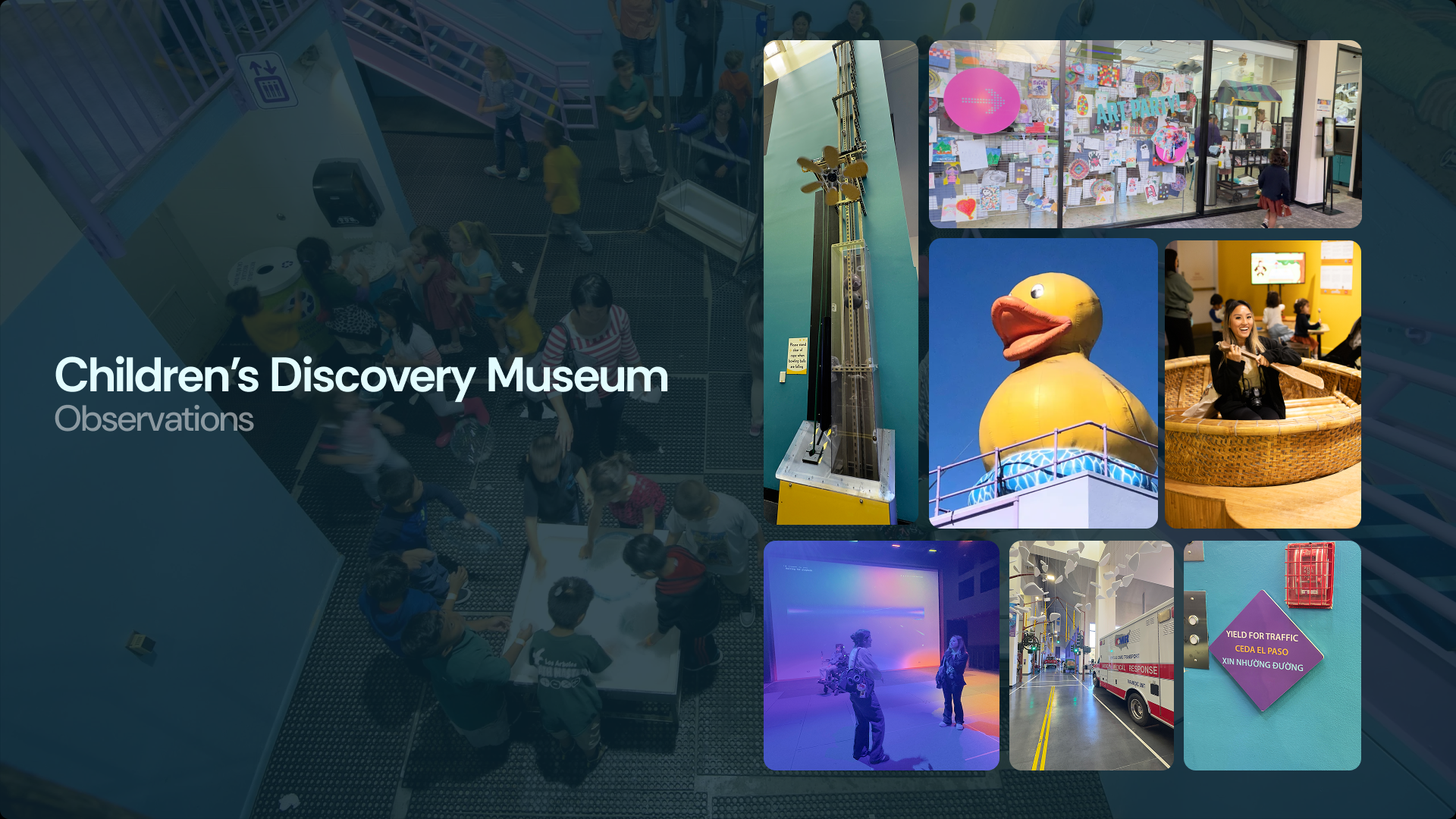
The Children’s Discovery Museum had a very different atmosphere. It was bright, loud, playful, and highly interactive. Families and children moved through exhibits together, often co-playing, talking, experimenting, and collaborating.
Many exhibits were culturally rooted or connected to sustainability. Staff were active observers and facilitators, helping children engage with installations when needed. Civic engagement appeared through play, family bonding, and early social learning
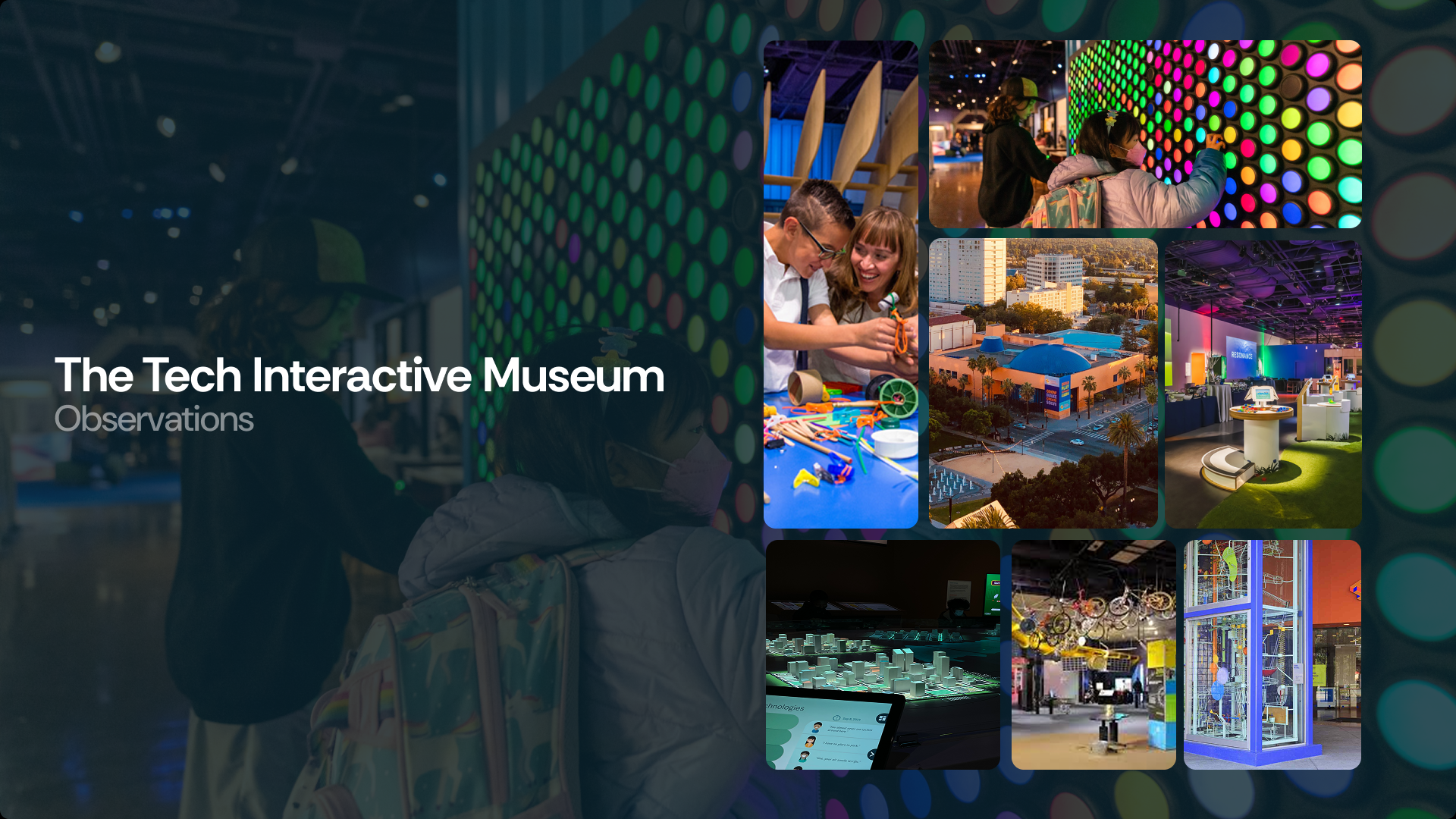
At The Tech Interactive, civic engagement appeared through STEM, experimentation, and collaboration. Exhibits encouraged visitors to prototype, problem-solve, and think about real-world issues.
The Tech intentionally designs for belonging through bilingual exhibits, culturally familiar materials, and community co-creation. This helped us understand how innovation, education, and civic responsibility can intersect.
INTERVIEWS
We interviewed museum professionals across education, exhibit design, marketing, visitor experience, and community engagement.
What We Heard From Professionals
Museum staff consistently described civic engagement as something deeper than attendance. For them, it included empowerment, representation, access, belonging, storytelling, and trust.
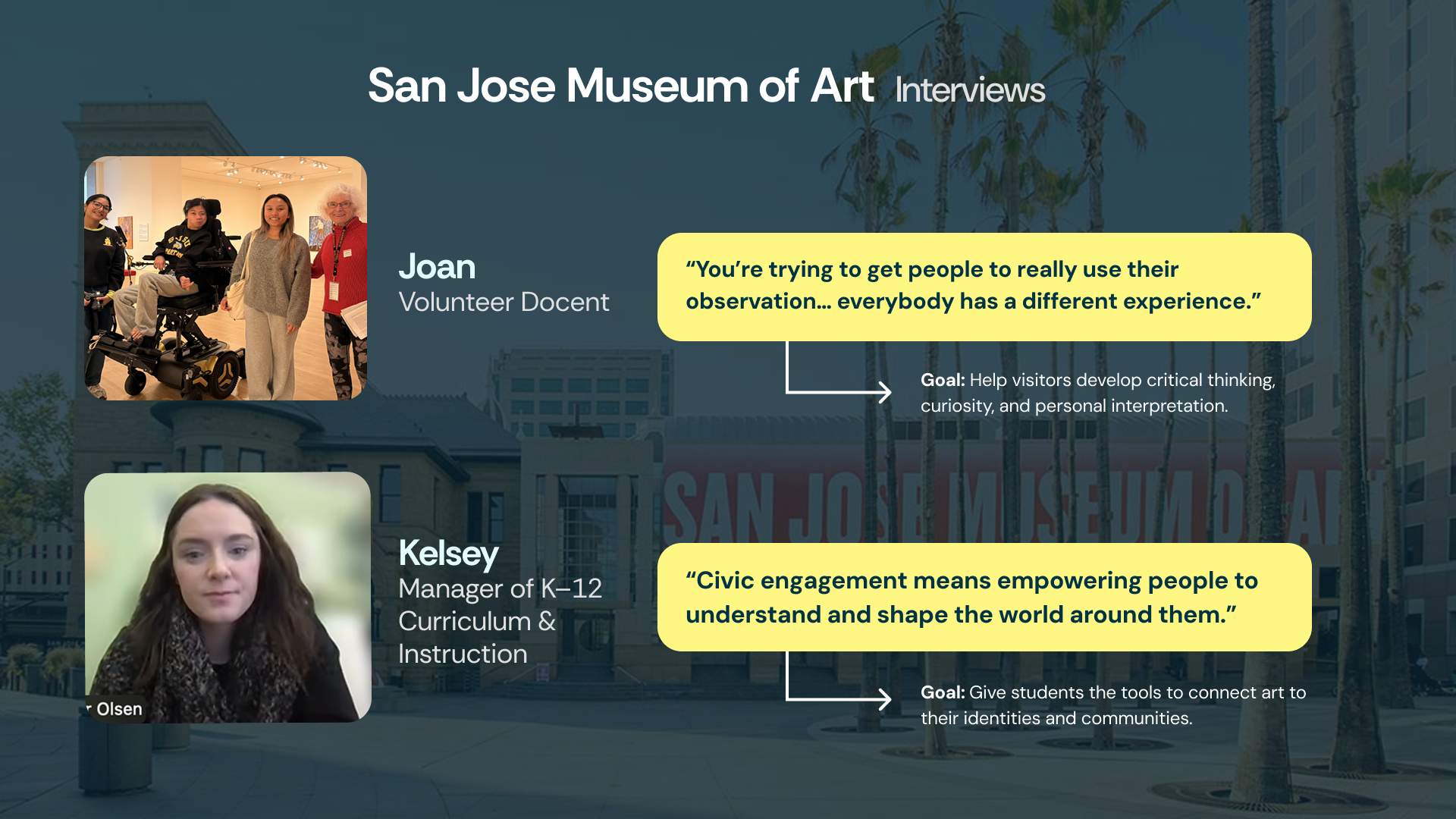
At SJMoA, staff emphasized observation, interpretation, and helping visitors develop personal meaning.
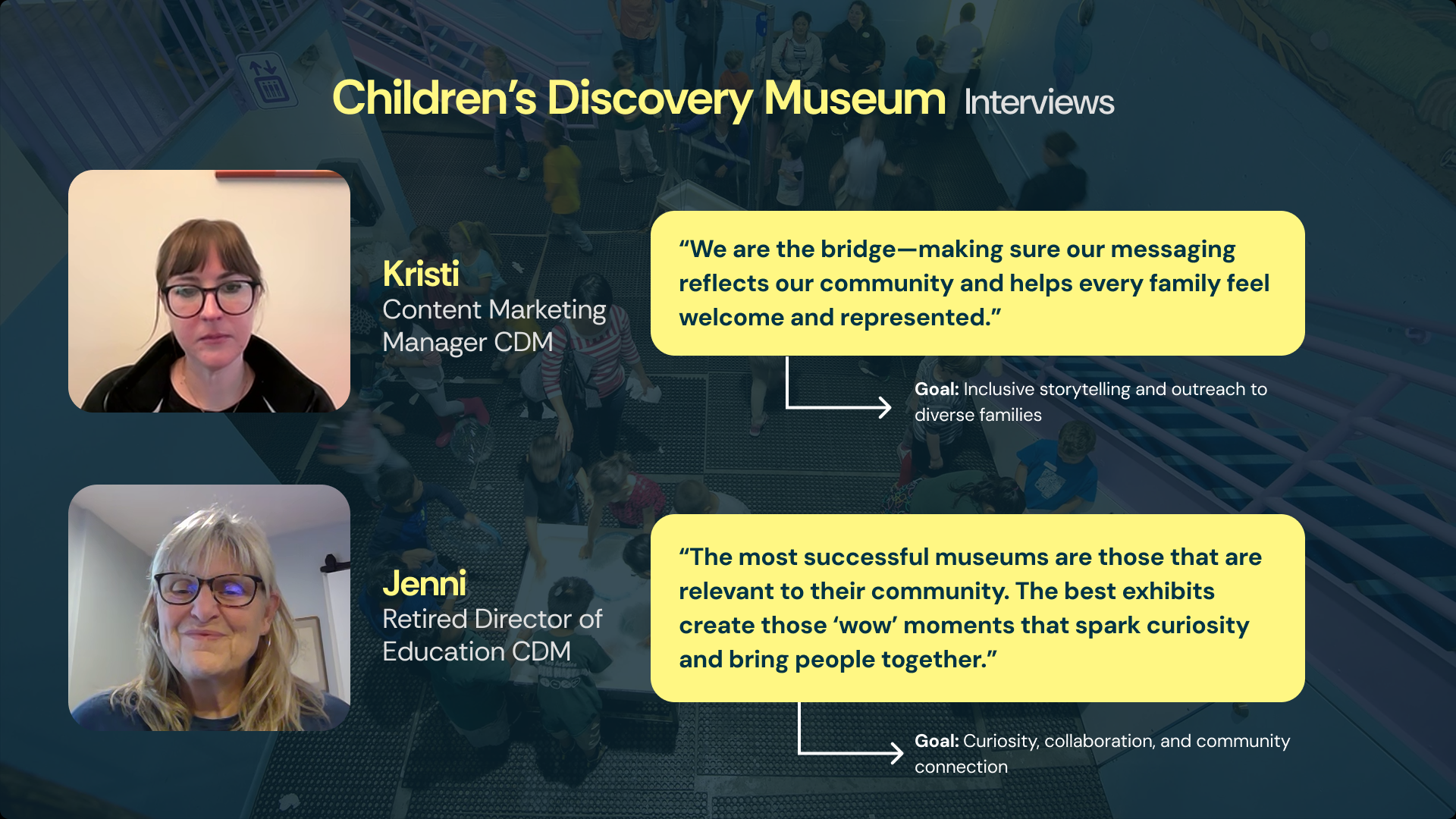
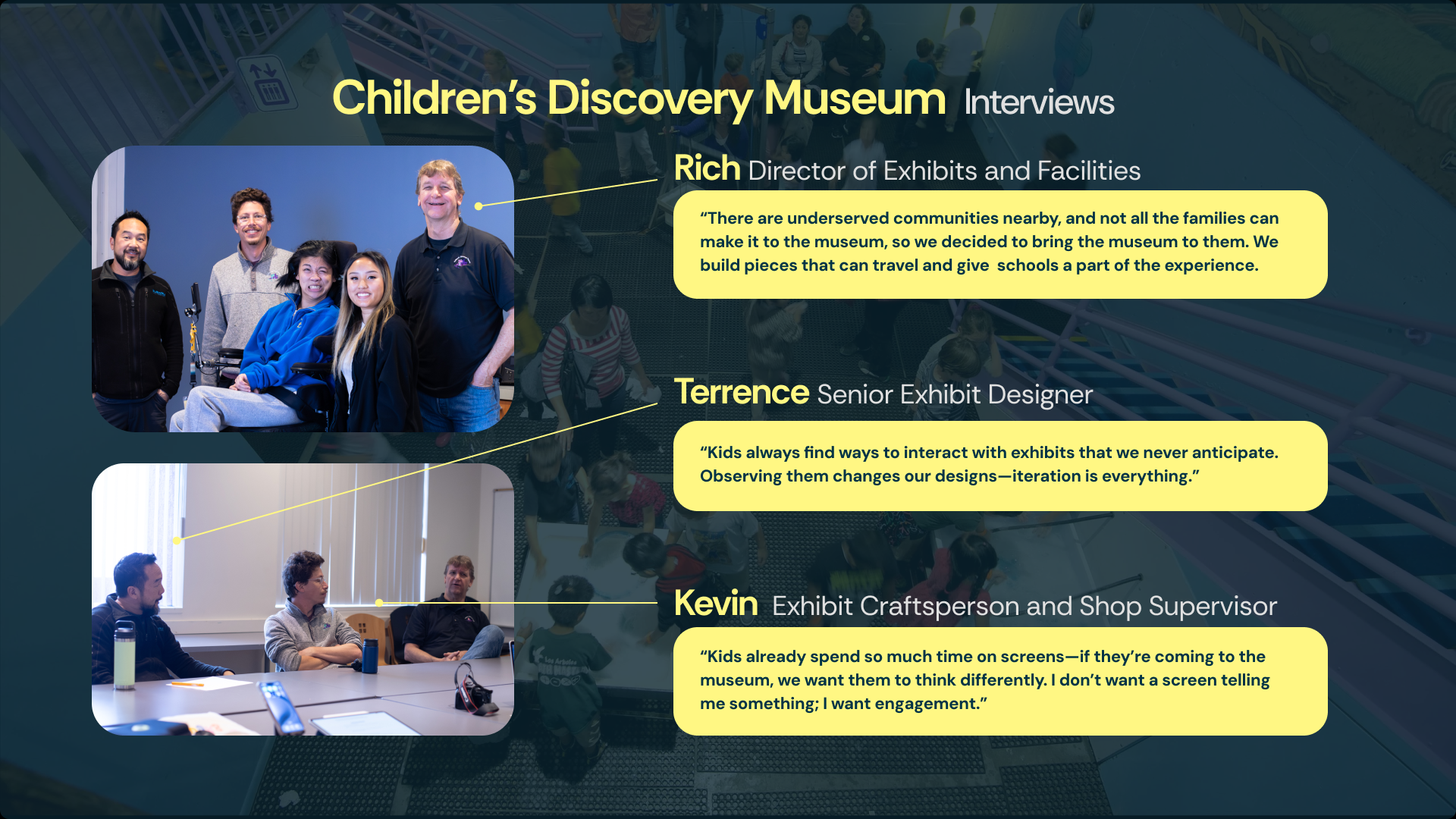
At CDM, staff described children as active collaborators, not passive visitors. They emphasized play, curiosity, multigenerational learning, and designing for families who may experience the museum in different ways.
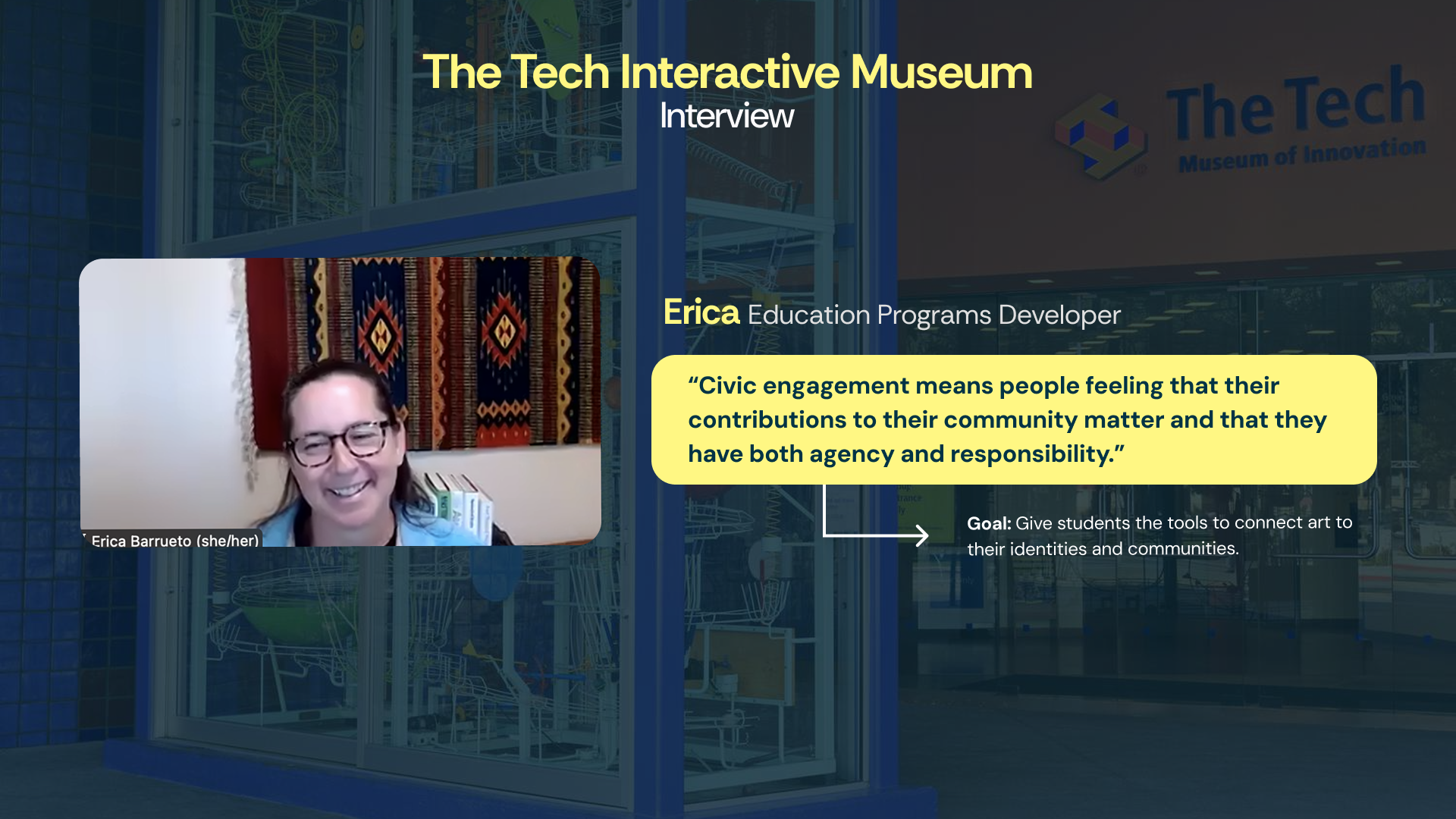
At The Tech, civic engagement was connected to belonging and innovation. Visitors were encouraged to see their ideas as valuable and to understand themselves as problem-solvers.
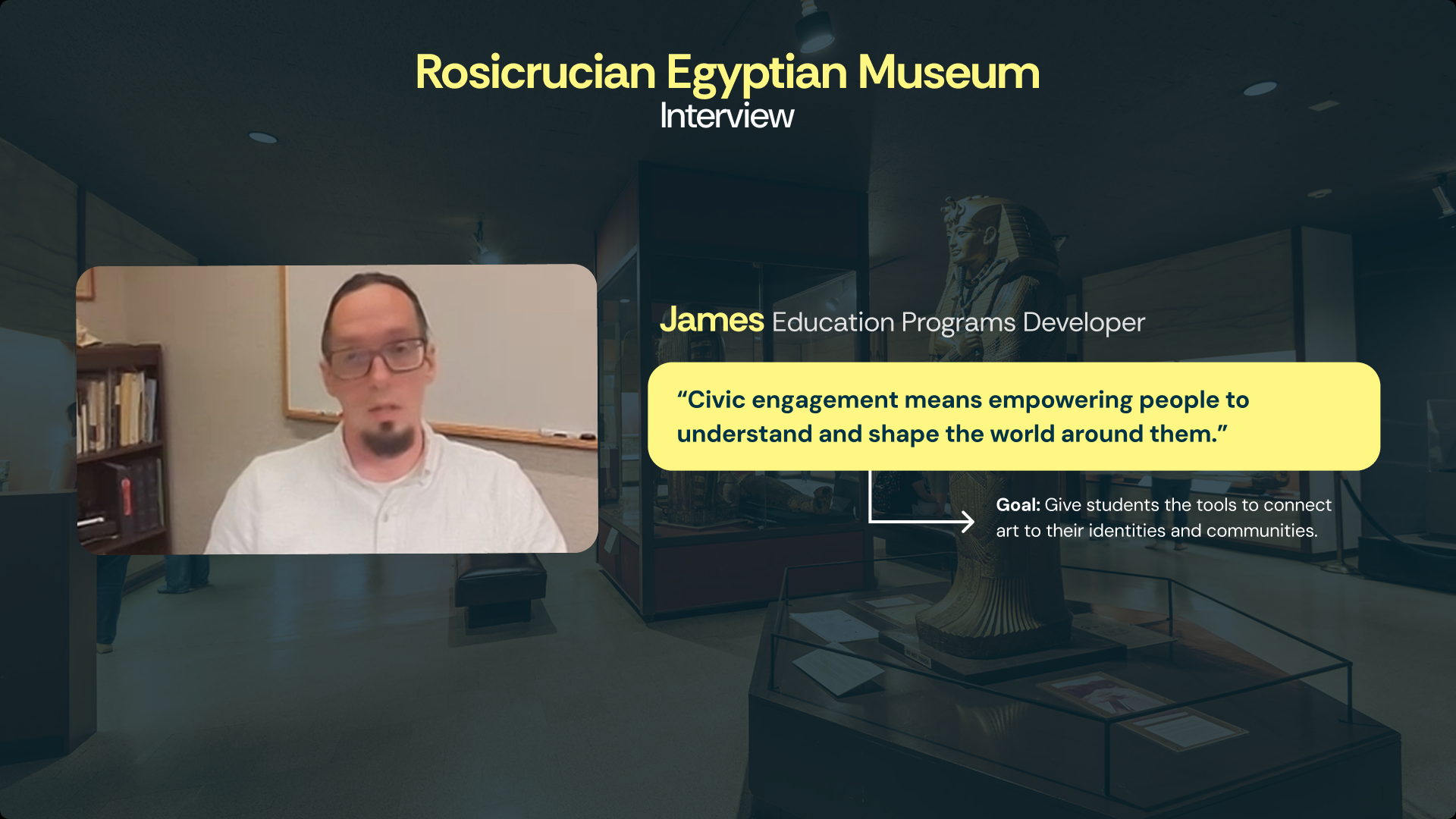
Across interviews, professionals cared deeply about inclusive learning, but they also faced limitations: limited visibility into visitor needs, sparse feedback systems, and the challenge of making behind-the-scenes work visible.
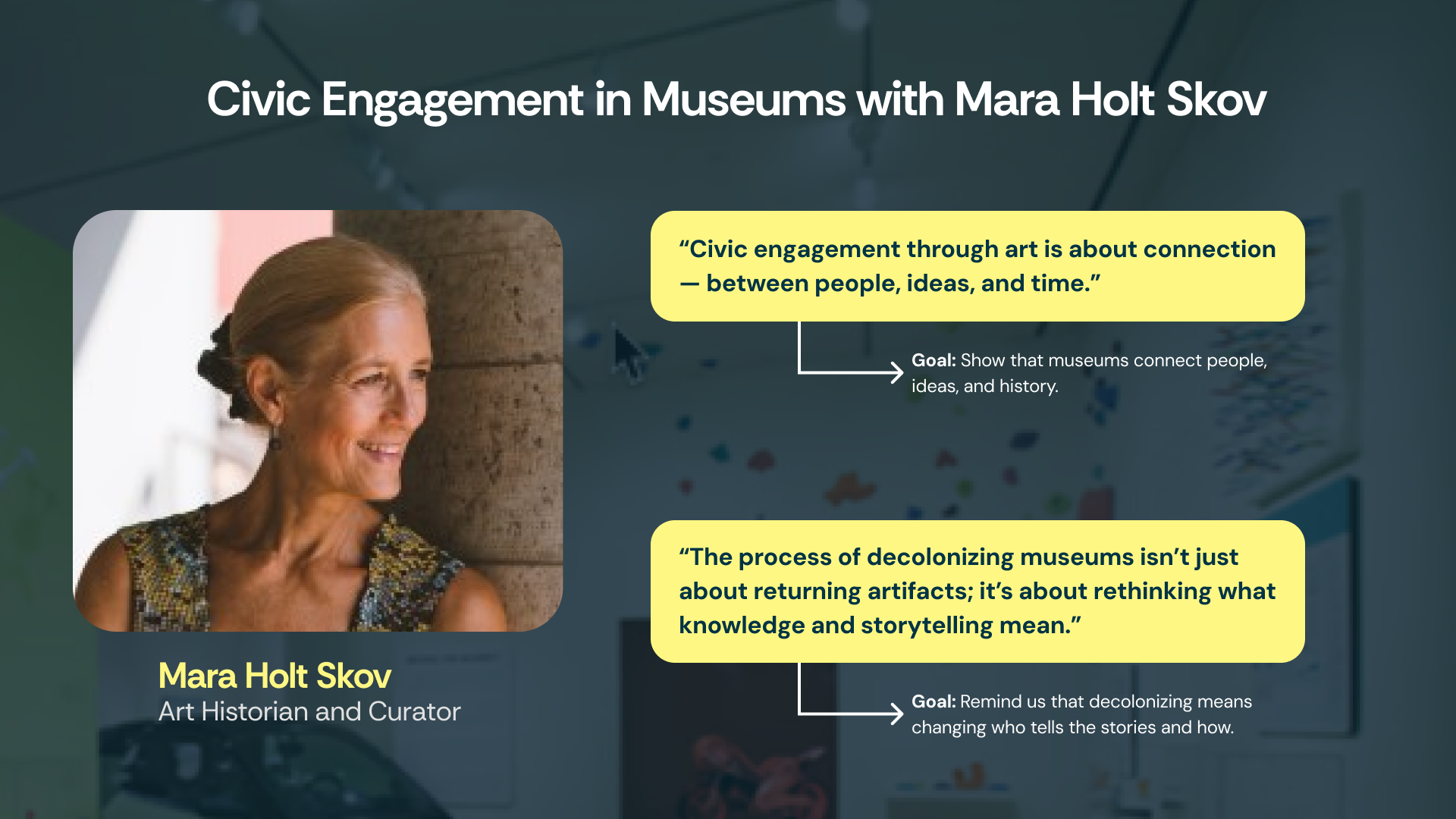
In our conversation with Mara an Art Historian and Curator, she pushed us to think about civic engagement as connection — not just between people, but between ideas, history, and lived experiences.
She reminded us that museums aren’t just places to look at art; they’re spaces where meaning is created through dialogue.
She also emphasized that decolonizing museums goes far beyond returning objects. It requires rethinking who gets to tell the stories, whose voices are centered, and how museums can become more ethical and inclusive in their narratives.
Her perspective helped us see museums as active civic spaces where storytelling shapes community understanding.
What We Heard From Visitors
Visitors wanted museum experiences that felt more personal, accessible, and relevant. They valued storytelling, emotional connection, and recommendations from people they trust.
However, visitors also described barriers:
Not knowing which museums or events were nearby
Feeling overwhelmed by dense exhibit text
Not always understanding the deeper context behind exhibits
Wanting more interactive or personalized ways to learn
Not knowing how to give feedback beyond a survey or review
Seeing museums as occasional destinations instead of ongoing community spaces
Interview Insight
Museum professionals want to create meaningful civic experiences, while visitors want easier ways to discover, understand, participate, and share their voices.
The opportunity was to design a bridge between these two needs.
RESEARCH INSIGHTS
After synthesizing our observations and interviews, we identified five major insights.
Insight 1: Civic engagement is already happening, but it is often invisible.
Museums are doing a lot of civic work through education, representation, community events, and exhibit design. However, visitors do not always see or understand the labor behind these experiences.
Insight 2: Visitors want deeper learning, but not in overwhelming formats.
Visitors are interested in context and meaning, but long text labels, dense information, or unclear interpretation can make exhibits feel intimidating.
Insight 3: Feedback systems are weak and delayed.
Museums often rely on QR codes, paper surveys, or informal staff conversations. These methods do not consistently capture visitor needs in the moment.
Insight 4: Trust influences participation.
Visitors often rely on friends, community reviews, and personal relevance when deciding where to go. They are more likely to visit a museum when they feel the experience is meant for them.
Insights 5: Civic engagement continues after the visit.
Reflection, sharing, saving exhibits, attending events, and discussing experiences with others all extend the museum’s civic impact beyond the building.
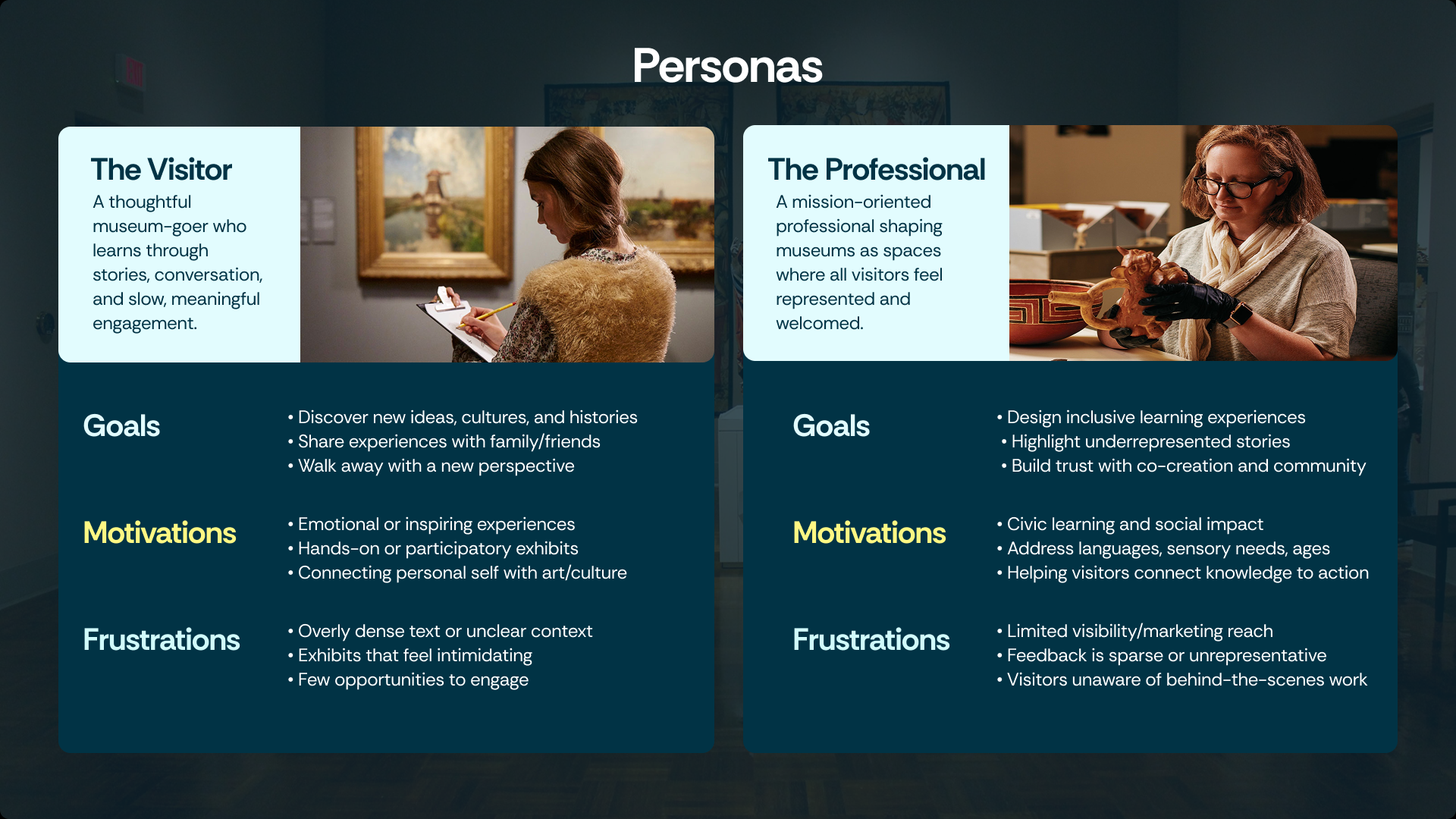
From our research, two primary personas emerged: the visitor and the museum professional. Seeing these two perspectives together helped us understand the gap between what visitors need and what professionals are trying to create and that gap directly shaped the direction of our design solution.
DESIGN GOALS
Based on our research, we defined four design goals for VOQA.
1. Make museum discovery easier
Visitors should be able to quickly find nearby museums, exhibits, and community events.
2. Make exhibit learning more accessible
The app should help visitors understand exhibits through stories, summaries, and multiple learning formats.
3. Make feedback feel natural
Visitors should be able to share thoughts while the experience is still fresh, not only after the visit.
4. Make civic engagement visible
The app should show the people, events, stories, and community connections behind museum experiences.
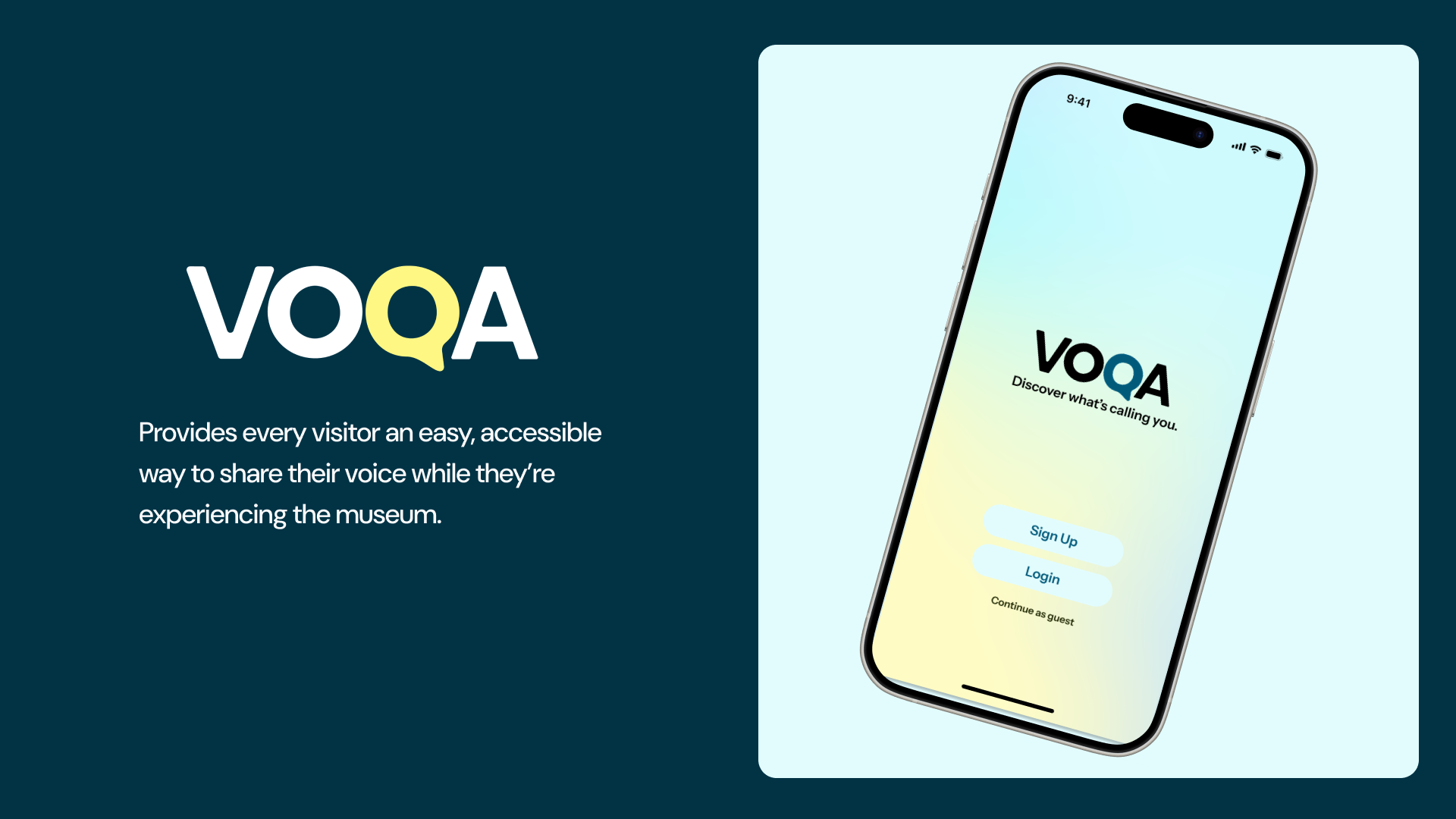
The final prototype presents VOQA as a civic museum companion for San José visitors.
VOQA helps visitor
Discover nearby museums and events
Learn from exhibits in accessible ways
Share feedback and reviews
Understand the people behind museum work
Build a personal record of museum experiences
VOQA helps museumsReceive more meaningful visitor feedback
Understand what visitors value
Make events and programs more visible
Highlight behind-the-scenes labor
Strengthen trust with local communities
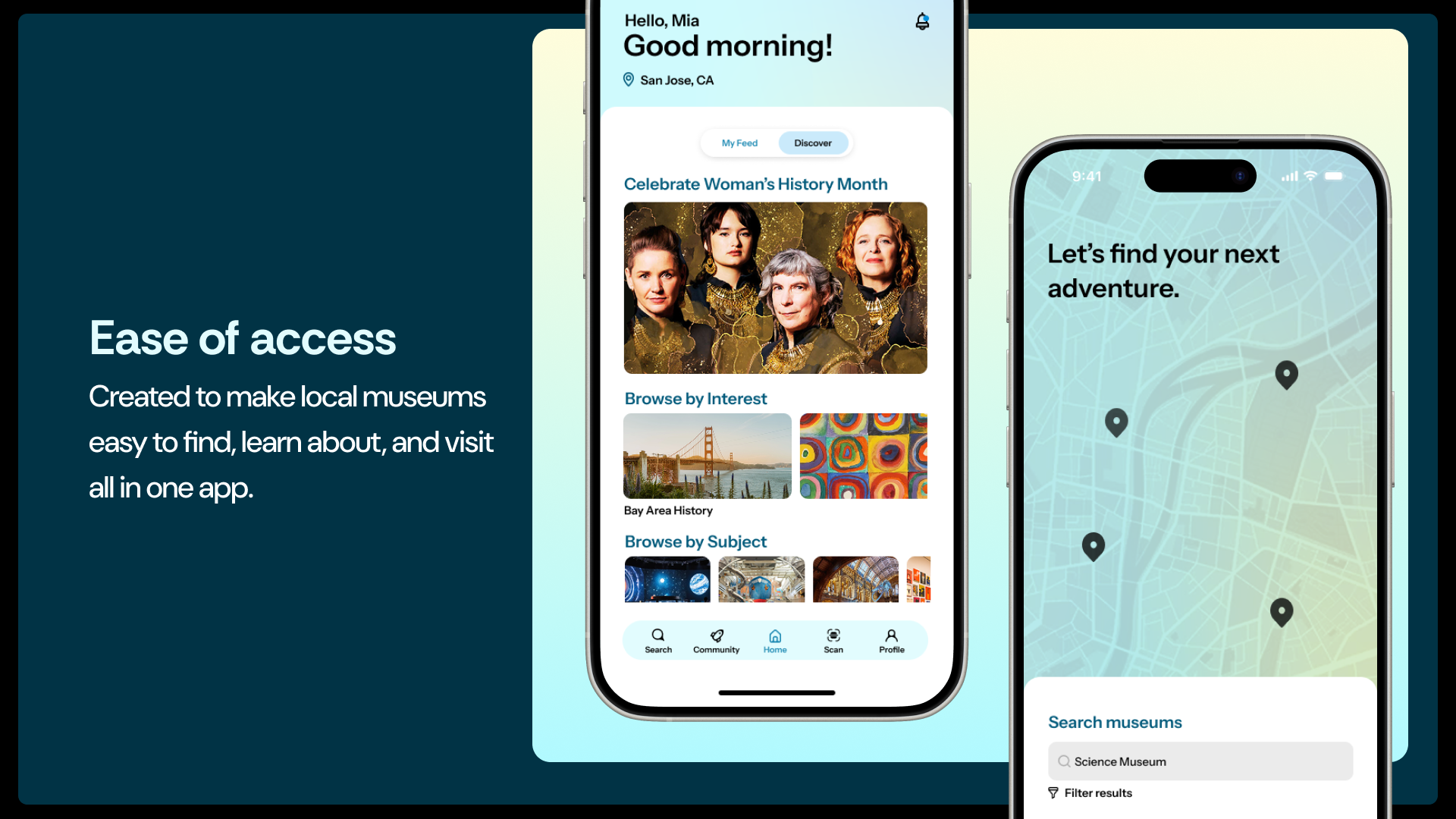
Feature 1: Personalized Museum Discovery
The home screen helps visitors find museums near them, browse exhibits, see community events, and discover where friends have recently visited.
This addresses a key visitor barrier: people often do not know what museums are nearby or whether the experience will feel relevant to them.
By organizing local museum information in one place, VOQA makes civic participation easier to begin.
Feature 2: Curated Discover Feed
The Discover Feed allows visitors to explore topics, exhibits, and stories based on their interests. Instead of relying on one-time Google searches or scattered museum websites, users can browse cultural content before, during, and after a visit.
This makes museum learning feel continuous rather than limited to the physical visit.
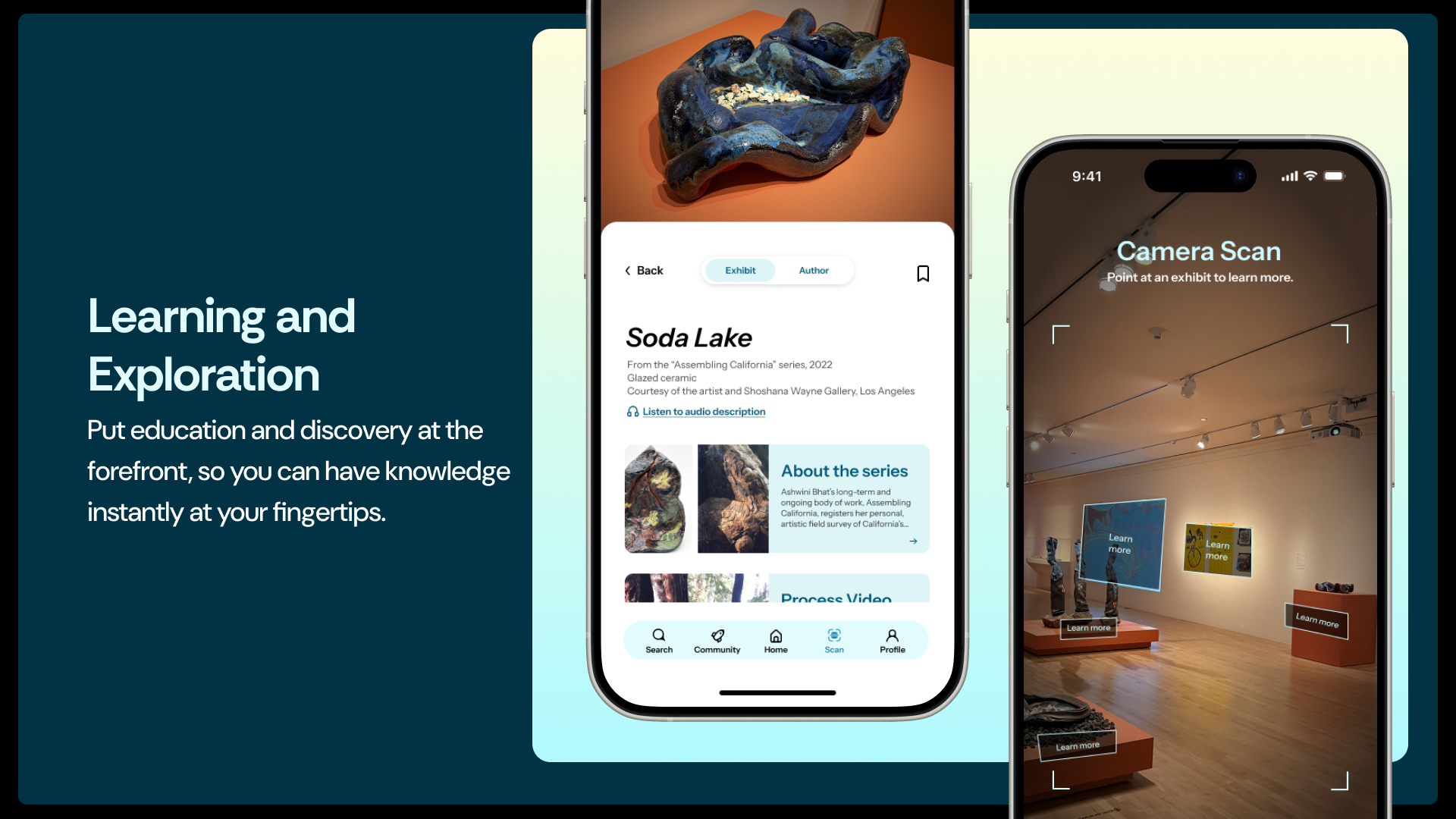
Feature 3: Camera Scan for Exhibit Learning
The Camera Scan feature allows visitors to point their phone at an exhibit and instantly access stories, explanations, artist information, or related context.
This supports different learning styles and reduces reliance on long wall labels. It also helps visitors who want deeper context but may feel overwhelmed by traditional exhibit text.
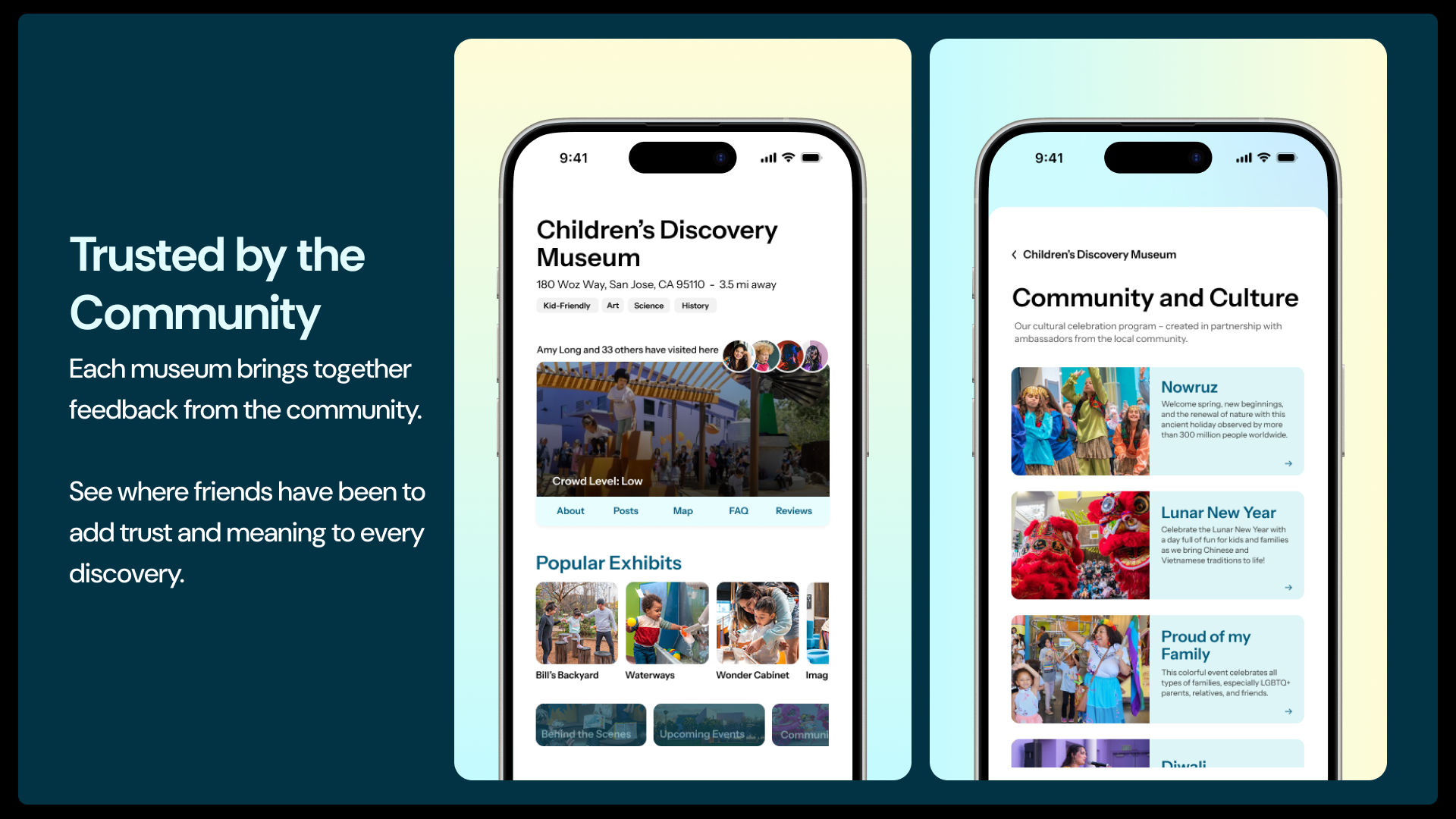
Feature 4: Community Reviews and Social Trust
Visitors can browse reviews, see what friends have visited, and understand which exhibits resonate with people like them.
This feature turns museum discovery into a shared experience. It also gives museums a clearer understanding of what visitors value, where confusion appears, and what moments create connection.
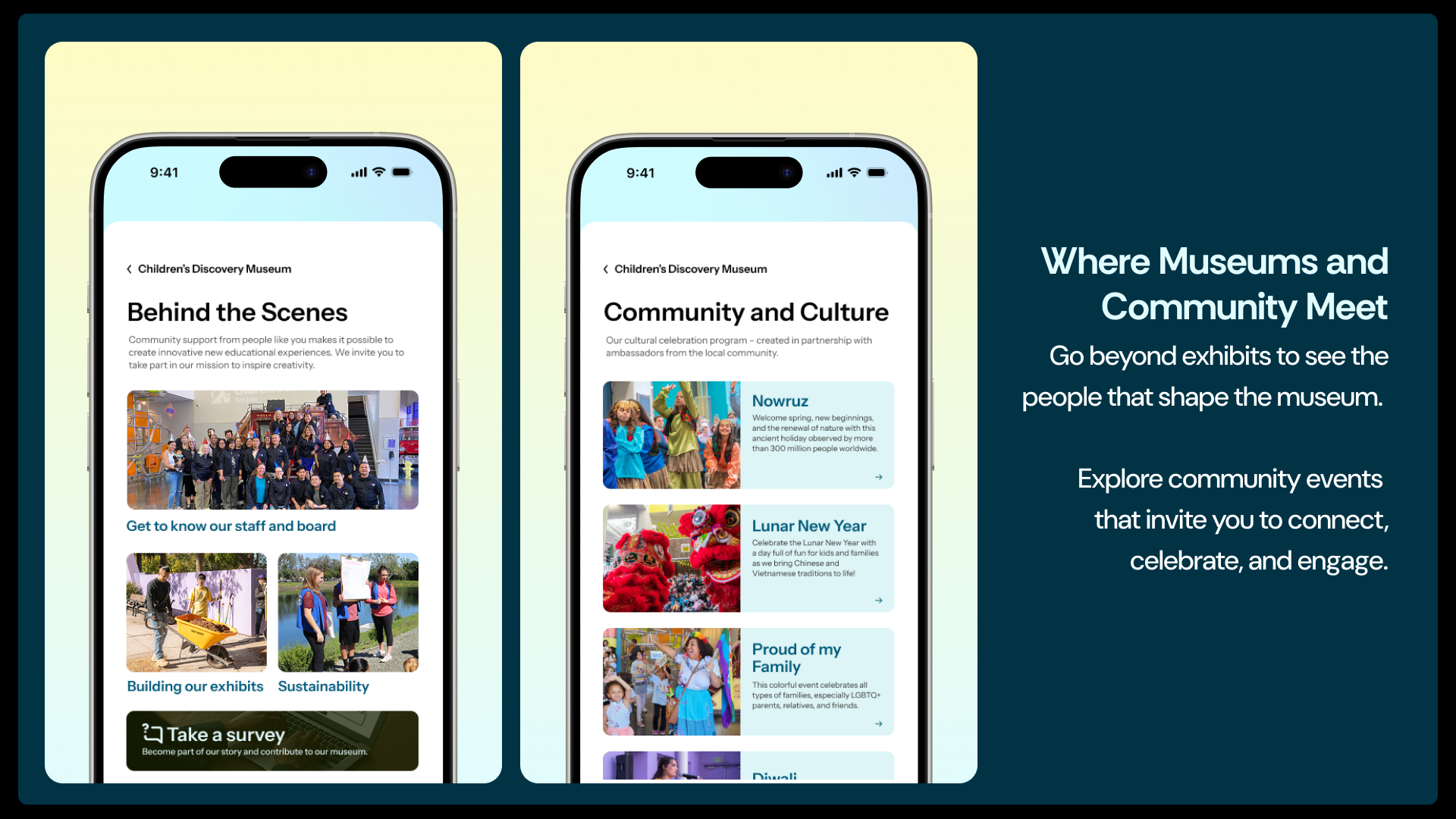
Feature 5: Behind the Scenes
VOQA highlights the people, labor, and stories behind museum experiences. Visitors can learn about curators, educators, artists, exhibit teams, and community collaborators.
This feature came directly from our research on invisible labor in museums. It helps visitors understand that civic engagement is not only what appears in the gallery, but also the work that makes inclusive storytelling possible.
Feature 6: Community and Culture Events
Visitors can browse local museum events, cultural celebrations, workshops, and family programs.
This supports civic engagement by helping users participate in the museum as an active community space, not just a place to observe exhibits.
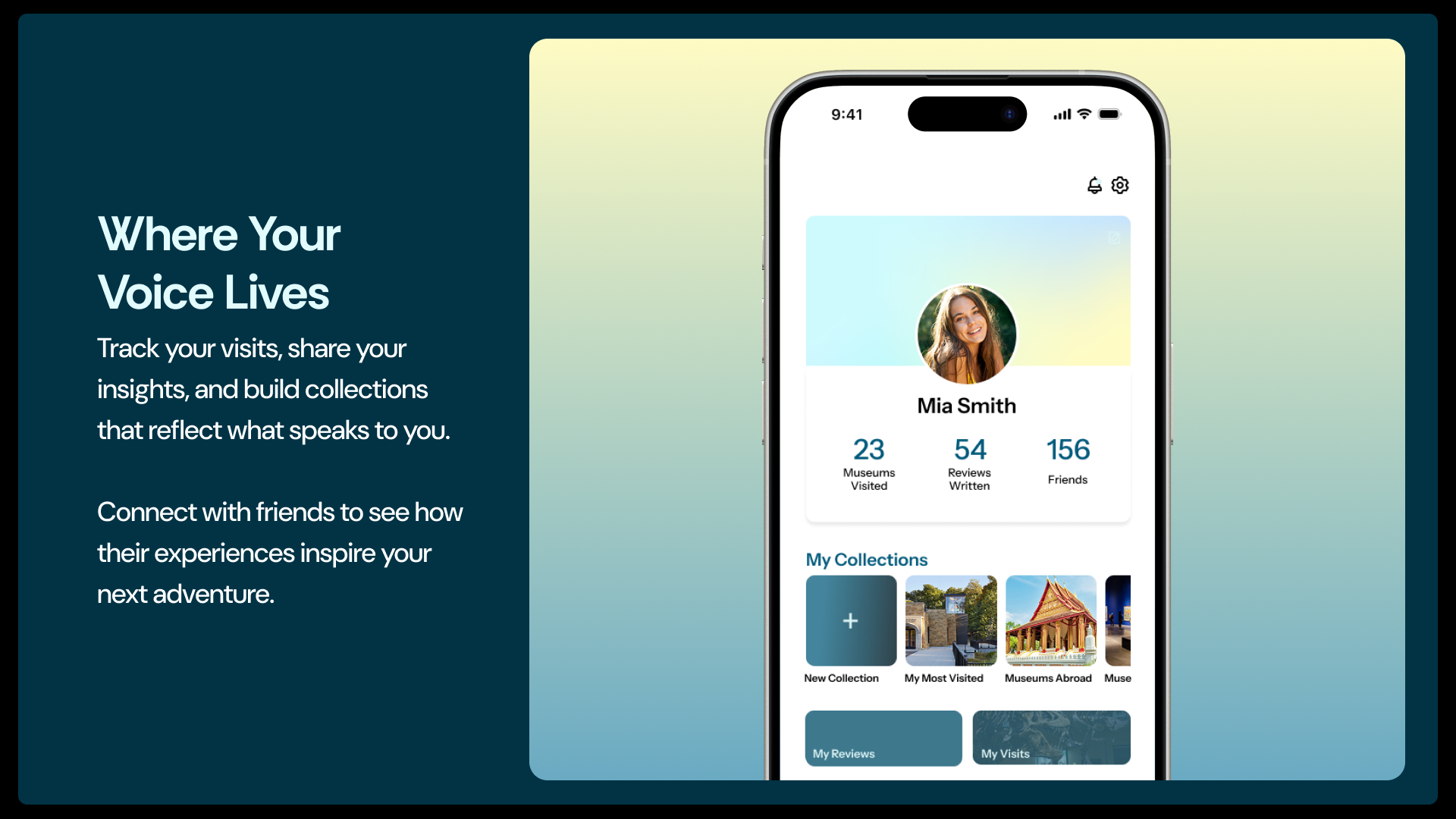
Feature 7: Personal Profile and Collections
The profile section gives users a place to track visits, save exhibits, write reflections, and build collections of meaningful museum experiences.
This turns museum-going into an ongoing learning journey. Visitors can revisit what inspired them and see how their experiences connect to friends, communities, and future visits.
BRAND AND VISUAL DESIGN
VOQA’s visual direction was designed to feel welcoming, civic, and exploratory. Since the app is about museums and community learning, the interface needed to feel informative without becoming too academic or intimidating.
Visual Design Goals
Friendly and accessible
Calm but engaging
Local and community-centered
Easy to scan on mobile
Light, open, and inviting
Flexible enough for art, history, science, and children’s museums
The app uses soft backgrounds, rounded cards, image-led content, and simple navigation to create a familiar mobile experience. This helps reduce friction for visitors who may not be frequent museum-goers.
The bottom navigation keeps the core actions visible: discovering, searching, scanning, community, and profile. Cards and content modules make the app feel similar to platforms users already understand, while still supporting civic and educational goals.
CHALLENGES
Defining civic engagement clearly
Civic engagement is a broad concept, and at first it was difficult to narrow it into something we could observe and design for. We had to move from abstract definitions to concrete behaviors such as learning, reflecting, sharing, attending events, giving feedback, and connecting with community stories.
Balancing visitor needs and museum needs
Visitors wanted easy, personal, and accessible experiences. Museum professionals needed meaningful feedback, visibility, and stronger community relationships. The challenge was designing something that served both sides without making the app feel too institutional.
Translating research into product features
Our research produced many possible directions: events, education, feedback, accessibility, storytelling, reviews, and community-building. We had to prioritize the features that best supported the core problem.
Making the app feel civic without feeling heavy
We wanted VOQA to support civic engagement, but we did not want the experience to feel like homework or a government service. The interface needed to feel light, familiar, and emotionally engaging.
REFLECTION AND LEARNINGS
This project helped me understand how UX design can support civic and cultural spaces, not just digital products. Museums already hold deep educational and community value, but the way people access, interpret, and respond to those experiences can be improved through thoughtful design.
I learned that civic engagement does not always look like formal participation. Sometimes it looks like a child playing with a parent, a visitor recognizing their culture in an exhibit, a student asking a new question, or someone leaving feedback that helps a museum improve.
Working with a team also strengthened my research and collaboration skills. We divided responsibilities across fieldwork, interviews, synthesis, and presentation, then came together to identify patterns and shape the final direction. After the group phase, I continued refining the app and case study to better communicate the product vision and design decisions.
The biggest takeaway for me was that good civic design should make participation feel natural. VOQA does not ask visitors to become experts in civic engagement. Instead, it gives them small, accessible ways to discover, learn, reflect, and share their voice.